Monthly Archives: April 2025

Eboni Booth: Story/Teller

Eboni Booth’s Pulitzer Prize winning Primary Trust is currently one of the most performed plays regionally.  It is the kind of work that people say leaves them “shattered,” “undone” and “wrecked” and they mean that in a good way.  The New York Premiere was my return to live theater after more than three years because of COVID.  The themes explored, especially when delivered by the incomparable William Jackson Harper, could not have provided a more perfect balm.  Though written in May of 2023, that review remains my second most read.  (You can read it for yourself here: https://theunforgettableline.com/2023/05/30/primary-trust/)   

To celebrate the printing of the Primary Trust script, TCG, dramatic literature’s largest independent trade publisher, presented an evening with Ms. Booth. The book’s cover shows a small town street with each side mirrored in the other, beautifully reflecting the feelings evoked by the original set design. 

The evening opened with a short reading by Harper accompanied by original composer/perform Luke Wygodny on cello and the bell meant to represent the way in which our thoughts frequently interrupt themselves.  These scenes gave newcomers a taste of Primary Trust’s beauty and provided a strong reminder to anyone who saw the full production.  
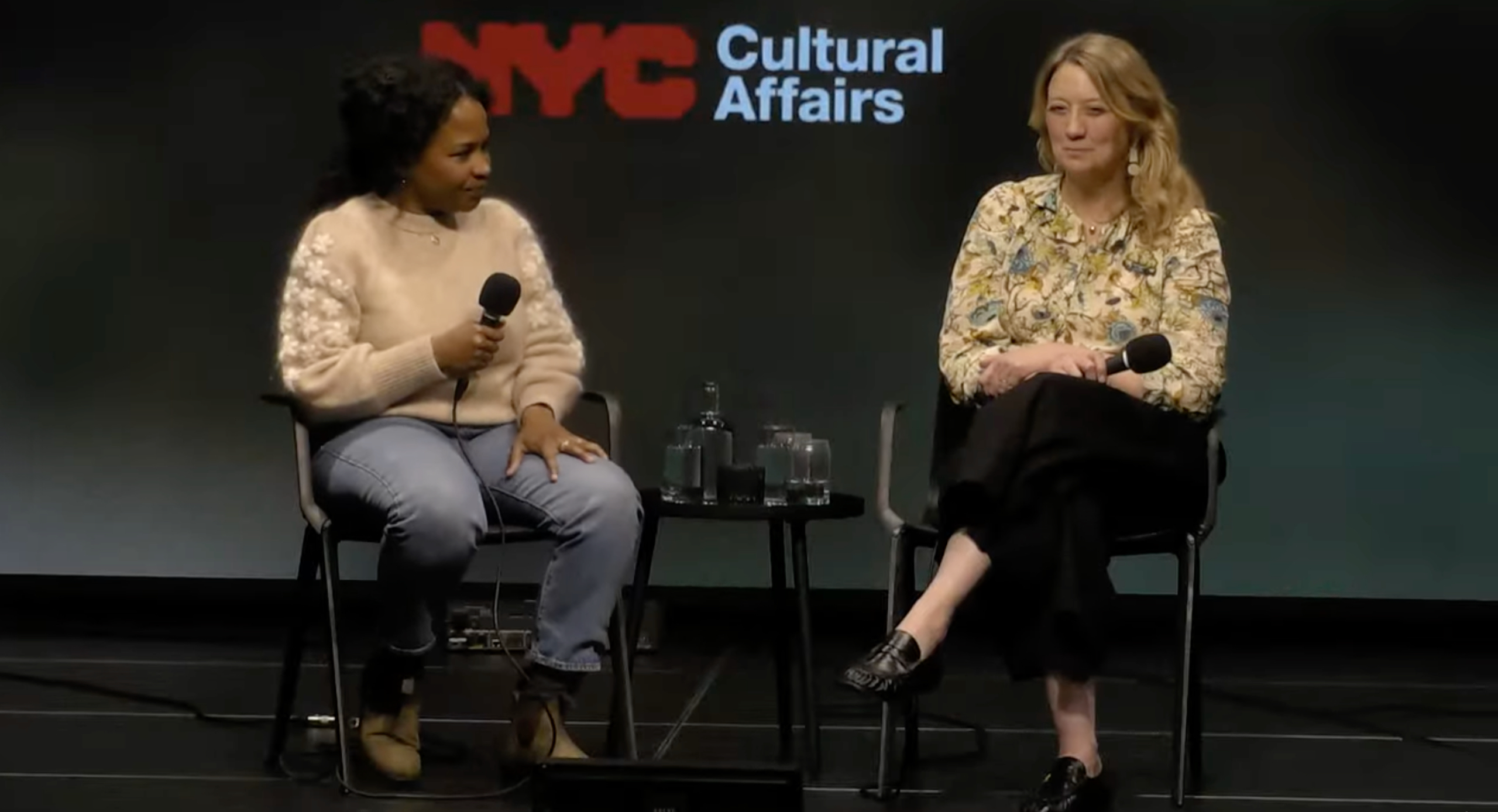
Eboni Booth and Heidi Schreck on April 16, 2025

The conversation was hosted by another recognizable actress turned playwright, Heidi Schreck (What the Constitution Means to Me).  Both women have participated in the collaborative incubator, Clubbed Thumb, and are raising families in New York City.  This provided plenty of common ground.  The two comfortably chatted as if in their own local tiki bar about writing, acting, and what keeps them up at night.  

Ms. Booth came to playwriting in her late 30s when she pivoted away from acting and got herself into an advanced program at Juilliard in Manhattan.  She is honest about her sometimes clumsy first steps and counts David Adair and Marsha Norman among her teachers/guides to success.  

As with most powerful work, Primary Trust arose from a genuine place both personally and professionally.  Booth believes in the power of kindness from strangers, vividly remembering an encounter on the subway when the person next to her saw her crying and offered a tissue.  The notion that small steps can be life changing eventually grew into lead character Kenneth’s way of being.  By tapping into the discomfort left by prolonged COVID isolation and the need for tenderness towards one another, the audience became deeply invested in his wellbeing.

 All four cast members have rich material to work with. As a former struggling actress, Ms. Booth has distrain for the type of roles that serve a plot purpose but don’t give the performer anything meaty to do.  Booth’s style is more like that of a fiction writer, with long prosaic passages.  Shreck speculated that the radical structure of the play was likely one element that drew the attention of the Pulitzer jury and ultimately won her the prize.  

The event took place at the Center for Fiction, a 200 year old cultural non-profit in Brooklyn that promotes the values of engaging with fiction at all levels.  It was streamed through their YouTube channel (https://www.youtube.com/@TheCenterforFiction/streams) and will soon be available to view.
Glass. Kill. What If If Only. Imp.

The announcement of any performance of British playwright Caryl Churchill is cause for excitement.  She has long been a powerful and intriguing voice for gender equality, environmental protection, and sense of self while providing memorable entertainment.  On that score, the premiere program of four of her short works — Glass. Kill. What If If Only. Imp. — at The Public Theater is a disappointment.  Director James Macdonald and his artistic team have done a masterful job of making the production visually interesting.  But while moments gleam, it never comes together as a cohesive event.

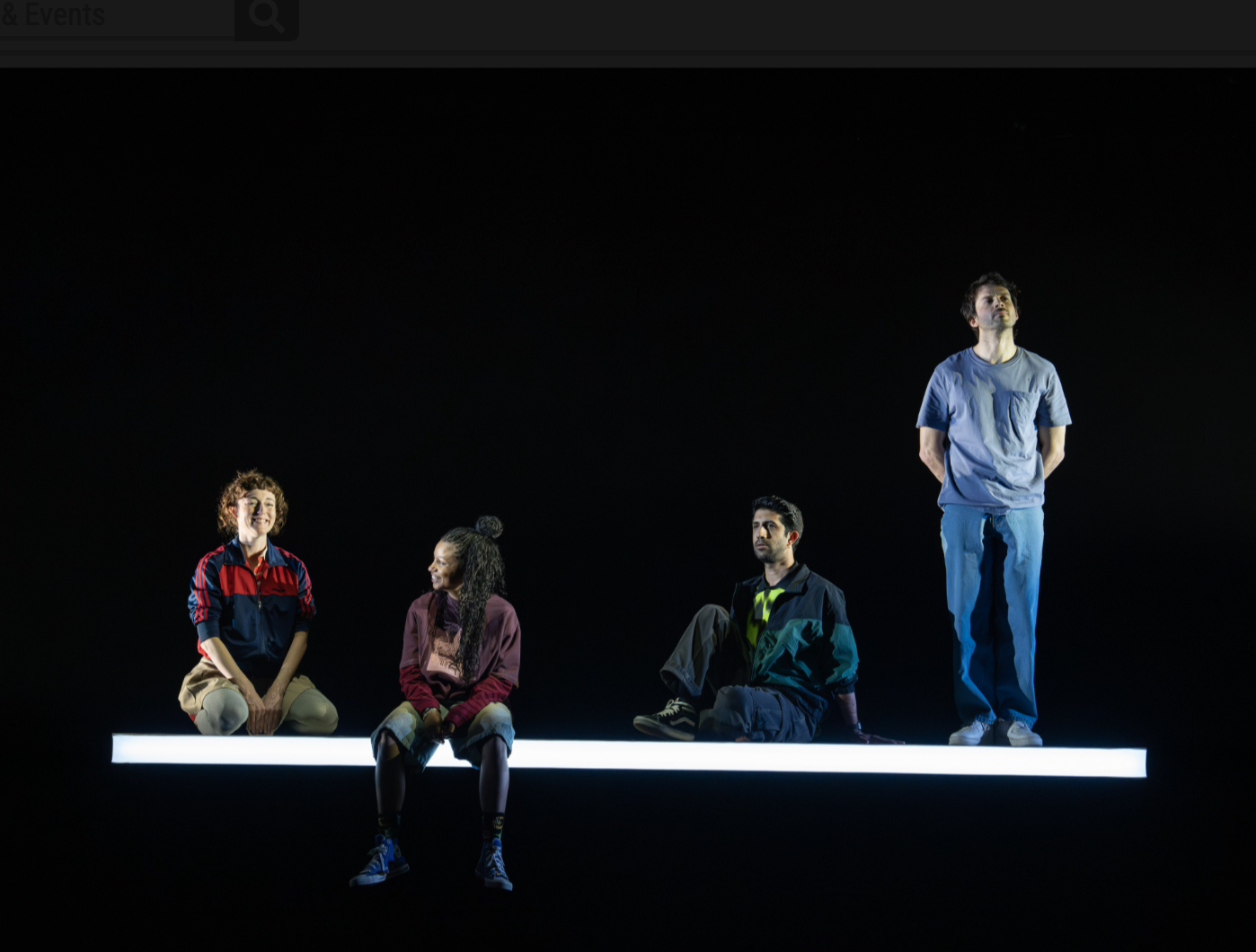
Glass explores the melancholy lives of four decorative items (Japhet Balaban, Adelind Horan, Sathya Sridharan, and Ayana Workman) beyond the confines of their shared mantelpiece. Designer Miriam Buether’s first impactful set is a solid LED jutting out from the darkness and demanding attention.  Though a soulful Workman gives depth to the glass figurine who is the catalyst for the tragic events that unfold, Glass plays out more like an acting class exercise than a full fledged work of theater.

Adelind Horan, Ayana Workman, Sathya Sridharan, and Japhet Balaban; photo by Joan Marcus

Deirdre O’Connell, who won a Tony Award for her solo work in Dana H, pulls off the chillingly violent patter of Kill.  Sitting comfortably on a puffy cloud, a sparkling god of Olympus recounts many evil deeds performed by men — from the prideful Tantalus to the warrior Agamemnon — in the Pantheon’s name.  The repetition would sound like the narration of a five-year-old were the content less bloody.  A knowledge of Greek mythology is essential for following the rapid-fire references, though the essence is clear from O’Connell’s tone and manner.

The first half is closed out with What If If Only, a meditation on love, loss, and the risks of second chances.  For this solemn reflection, Buether provides a still life setting in stark black, white and red.  The sound design of Bray Poor also plays a key role by reinforcing the oppressive atmosphere.  The philosophical theater game is anchored by John Ellison Conlee, who makes the absurd sound completely natural.  

Breaks between these plays are filled by two talented acrobats.  The first is Junru Wang, who performs a balletic work while her hands balance on small stools at the foot of the stage.  For the second, we are treated to what I christened a “juggler-tease” performed with flirtatious glee by Maddox Morfit-Tighe.  Unfortunately some of his choreography was out of the sight lines of the back half of the audience.  Whether these two talented people provide unity, distraction, or a fleeting moment of joy is up to the beholder.

The second half of the program is fully occupied by the more plot-heavy Imp.  Conlee and O’Connell portray Jimmy and Dot, friends close enough to consider themselves brother and sister of different parents.  The affable Jimmy lifts his mood with running and chess.  Slumped in a nearby chair, Dot is ill-temperated and unwell.  She also believes herself to be in possession of a magical imp imprisoned in a wine bottle.  

The rhythm of their lives is altered by the arrival of two newcomers.  First their niece, Niamh, a recent transplant from Ireland stops by.  (Horan is wonderful at delivering Neve’s wildest fears in recognizable Churchill style.)  Then the couch surfing Rob enters their lives (Balaban again).  The younger pair is tossed about, though who’s to say whether their bumpy ride is caused by a supernatural being, the differing attitudes of their hosts, or just life.

It is fitting that the stage on which Glass. Kill. What If If Only. Imp. are performed is framed in chase lights with definite personality (Isabella Byrd lighting design).  With its bitesized ideas and high level of engagement, it’s Caryl Churchill for the TikTok generation.  Churchill’s signature poetic language and extraordinary themes are intact, but there is too little structure.  The Playbill notes encourage us to look beyond conventional narratives, but humans are storytellers with a need for an organizing rope to hold.  The feeling left behind by experiencing these four shorts is more akin to a stroll through a depressive art gallery than witnessing an emotionally fulfilling theatrical work.  Performances continue through May 11th at the Martinson Theater at The Public, 425 Lafayette Street.  Running time is 2:15 with one intermission.  Tickets are available at https://publictheater.org/productions/season/2425/caryl-churchill-plays/ and start at $89.

All The World’s a Stage: First Look

Only two weeks into previews, the World Premiere of All the World’s a Stage is developing into a warm and enjoyable spring offering.  Though set in 1996 in small-town Pennsylvania, sadly the themes covered could be ripped from today’s headlines.  Adam Gwon’s lyrics are dense and expressive, but despite the many complex subjects he explores — bullying, book banning, religious indoctrination, and the very human need to be seen — it is hopefulness that is heard above them all.  Pair that with a memorable score and a quartet of talented performers, and this tale of a gay math teacher and the unusual student he mentors add up to a winning piece of entertainment.

The actors work together like four limbs of the same magical being.  Eliza Pagelle is wonderfully squirmy, adrift in her baggy cloths as unpopular high school senior Sam.  Matt Rodin embraces both the nerdiness and attractiveness of her protective closeted teacher Ricky.  Jon-Michael Reese and his big bold voice are perfectly suited to self-possessed bookstore owner Michael, who is out accompanied by trumpets and klieg lights.  And Elizabeth Stanley puts a relatable chink in the armor of by-the-book administrator Dede.  

Matt Rodin, Elizabeth Stanley and Eliza Pagelle in All the World’s a Stage at Theatre Row
Production Photography: Richard Termine

Keen Company’s Artistic Director, Jonathan Silverstein, takes the helm as the director of this lovely work.  The effect employed to create the unseen school principal is an example of his clever approach to promoting the big things in this small package.  Set designer Steven Kemp has made the most of the tight space in Theatre Row’s Theater 5, placing a short cinder block wall around the musicians and steps downstage to add more dimension.  Jennifer Paar has built an impressive wardrobe for each of the four central characters giving them even more to work with.   

Gwon’s book is filled with cultural references that have traveled well through time, especially the admiration for Tony Kushner’s Angels in America which was recently revived in New York and London.  Many lines earn a laugh of recognition from the audience.  (Who among us didn’t prefer listening to the cast album of Chess over following the stock market?)  His love for and knowledge of the theater is particularly needed at this time when the art form has been under attack.  The musical numbers cover a wide range of styles from the jingly “Saturday Night in a Small Auditorium”, through the campy “The Show Must Go On,” to the heartfelt “Mirrors” which had the hulk of a man sitting next to me weeping hard enough to wiggle my seat.  The four musicians under the direction of Andrea Grody stay wonderfully engaged with the onstage happenings without calling attention to themselves.

All the World’s a Stage packs a lot of emotion and life lessons into its current runtime of an hour and 40 minutes without getting preachy or losing its humanity.  It’s a compact work with enough heart to feel expansive.  Performances continue at Theatre Row thought May 10.  Tickets beginning at $25 can be purchased  online at www.keencompany.org, by phone at 212-714-2442 ex 45, or at Theatre Row Box Office at 410 W 42nd Street.