Category Archives: Feature

Eboni Booth: Story/Teller

Eboni Booth’s Pulitzer Prize winning Primary Trust is currently one of the most performed plays regionally.  It is the kind of work that people say leaves them “shattered,” “undone” and “wrecked” and they mean that in a good way.  The New York Premiere was my return to live theater after more than three years because of COVID.  The themes explored, especially when delivered by the incomparable William Jackson Harper, could not have provided a more perfect balm.  Though written in May of 2023, that review remains my second most read.  (You can read it for yourself here: https://theunforgettableline.com/2023/05/30/primary-trust/)   

To celebrate the printing of the Primary Trust script, TCG, dramatic literature’s largest independent trade publisher, presented an evening with Ms. Booth. The book’s cover shows a small town street with each side mirrored in the other, beautifully reflecting the feelings evoked by the original set design. 

The evening opened with a short reading by Harper accompanied by original composer/perform Luke Wygodny on cello and the bell meant to represent the way in which our thoughts frequently interrupt themselves.  These scenes gave newcomers a taste of Primary Trust’s beauty and provided a strong reminder to anyone who saw the full production.  
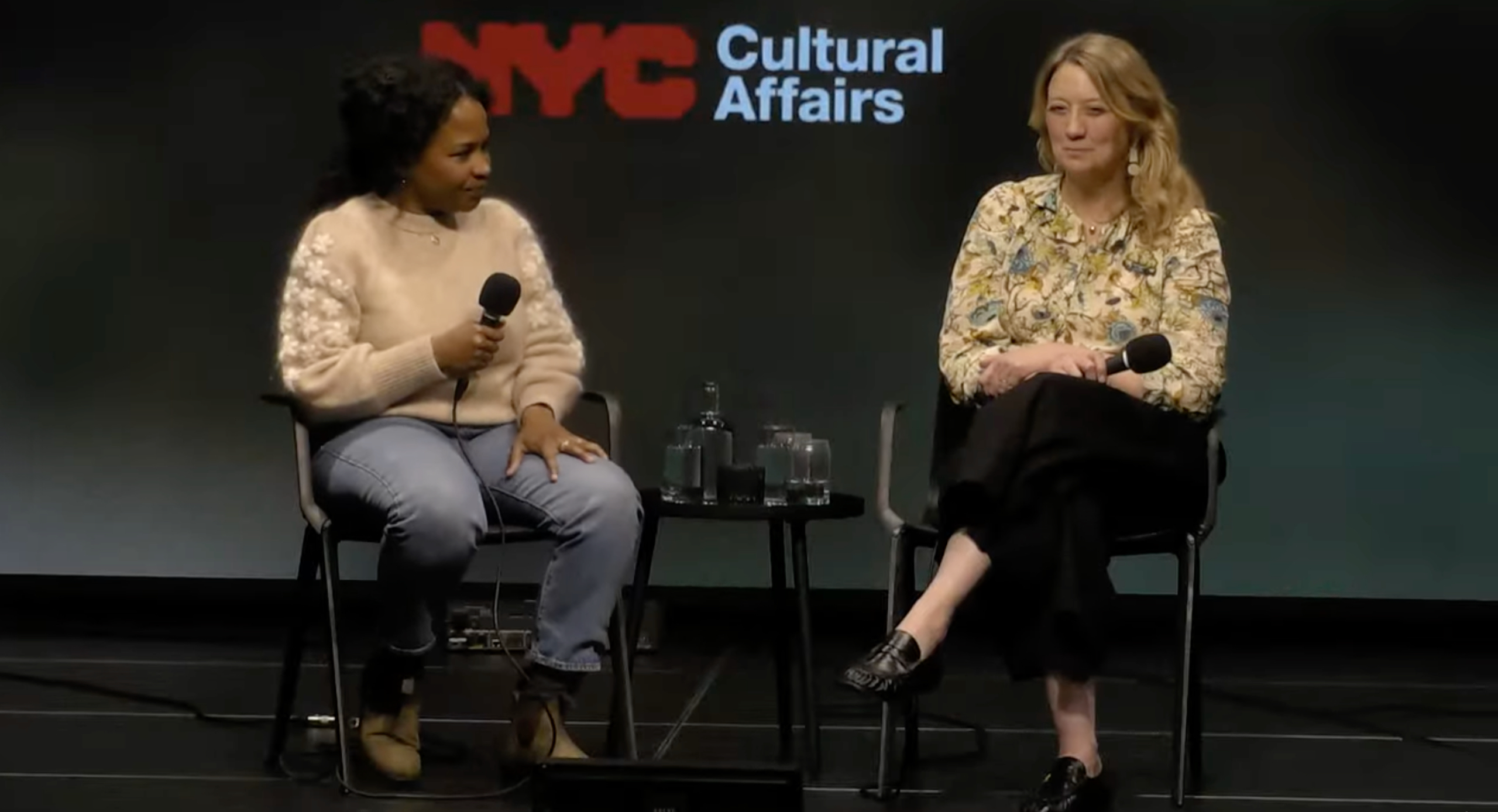
Eboni Booth and Heidi Schreck on April 16, 2025

The conversation was hosted by another recognizable actress turned playwright, Heidi Schreck (What the Constitution Means to Me).  Both women have participated in the collaborative incubator, Clubbed Thumb, and are raising families in New York City.  This provided plenty of common ground.  The two comfortably chatted as if in their own local tiki bar about writing, acting, and what keeps them up at night.  

Ms. Booth came to playwriting in her late 30s when she pivoted away from acting and got herself into an advanced program at Juilliard in Manhattan.  She is honest about her sometimes clumsy first steps and counts David Adair and Marsha Norman among her teachers/guides to success.  

As with most powerful work, Primary Trust arose from a genuine place both personally and professionally.  Booth believes in the power of kindness from strangers, vividly remembering an encounter on the subway when the person next to her saw her crying and offered a tissue.  The notion that small steps can be life changing eventually grew into lead character Kenneth’s way of being.  By tapping into the discomfort left by prolonged COVID isolation and the need for tenderness towards one another, the audience became deeply invested in his wellbeing.

 All four cast members have rich material to work with. As a former struggling actress, Ms. Booth has distrain for the type of roles that serve a plot purpose but don’t give the performer anything meaty to do.  Booth’s style is more like that of a fiction writer, with long prosaic passages.  Shreck speculated that the radical structure of the play was likely one element that drew the attention of the Pulitzer jury and ultimately won her the prize.  

The event took place at the Center for Fiction, a 200 year old cultural non-profit in Brooklyn that promotes the values of engaging with fiction at all levels.  It was streamed through their YouTube channel (https://www.youtube.com/@TheCenterforFiction/streams) and will soon be available to view.
True Community Theater: The LA Poverty Dept

Post pandemic, there’s been an uptick in conversations around the relationship between community and the theater.  Concerns have risen as regional theaters have reduced their offerings or closed altogether.  So when I was invited to a discussion entitled “How Theater Serves Community, and Community Serves Theater” I quickly signed up.  The event was being hosted by Bob Ost of Theater Resources Unlimited (TRU), a supportive group of playwrights, producers, writers and promoters.  Their COVID-motivated move to Zoom in April of 2020 has so far resulted in 175 conversation involving many TRU associates who live outside the New York City area where the organization was founded.  Although the evening was not what I had expected from the subject line, it was fascinating and ultimately quite moving.  

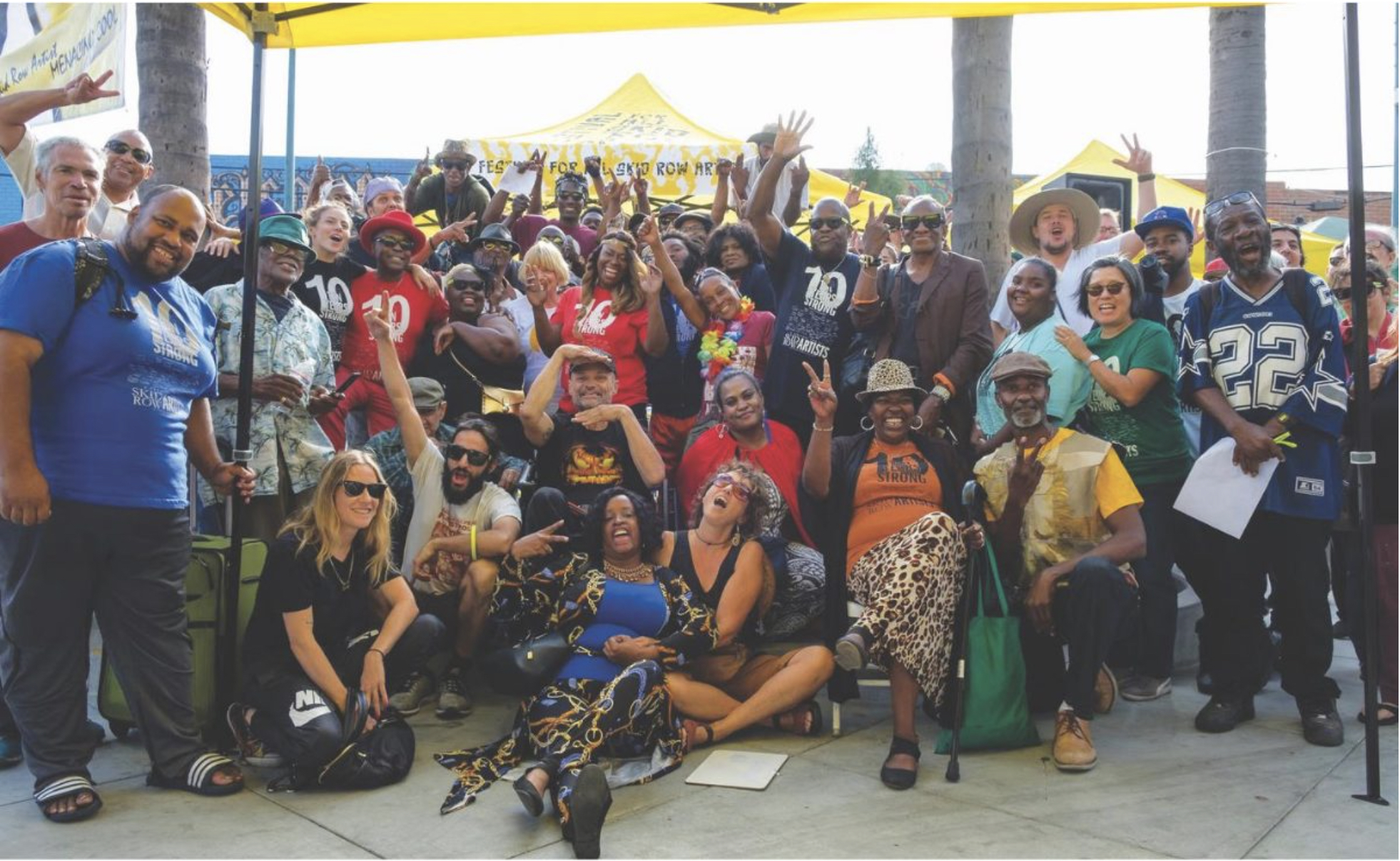
The guest speaker, John Malpede, heads up an unusual ensemble.  He is the Artistic Director of Los Angeles Poverty Department (LAPD, a deliberately stinging abbreviation).  The members of his ever-changing troupe are homeless.  The company grew out of Malpede’s meetings with activists from skid row and has been nurtured using his experiences gained in workshops throughout lower Manhattan.  He originally moved to the west coast to do outreach for the Inner City Law Center, and found overlap with his in-the-moment listening skills developed as as a performance artist.  Built on a firm foundation of compassion and Malpede’s knowing approach, the LAPD has continued to thrive for over 30 years.  For many, their participation in the project has been literally life changing.  

Malpede keeps the productions inclusive, which is a balm to those who are used to being marginalized or completely ignored.  With an open heart as well as open ears, he is able to tap into their natural creativity.  Most works start by improvising around an agreed-upon scenario.  This way even those with poor reading skills can be involved.  The process evolves like a huge trust-building excise with the constituents.   In lieu of a dedicated venue, the neighborhood has offered up offices, computer rooms, and other shared spaces that are available rent free usually after hours. No tickets are sold and promotion is almost exclusively through word of mouth.  Financial support comes through community grants, humanitarian support, and in-kind contributions.

The LAPD circa 2018; photo courtesy of The 18th Street Arts Center of Santa Monica

Most shows begin as a riff around a current high profile issue.  Representative Maxine Waters gave LAPD a transcript from a congressional hearing which they were able to perform in the style of Is This A RoomBack Nine grew from a movement to rezone a golf course, which raised awareness about the impact the elimination of public land has on the homeless.  State of Incarceration, which was presented in the Queens Museum in New York City, explored prison overcrowding by having the performers literally pressing in around the audience, referred to as “the witnesses”.  Their most recognized show was the B-movie style No Stone for Studs Schwarz. Inspired by the killing of several homeless people who had been sleeping on the streets near Chinatown, it featured a cast of 15. There was no “hard” script, so the outcome was slightly different each night, lending a genuine quality to every viewing. It ran for nearly a year, achieving a cult following.

For some participants, the LAPD theater program works as a springboard to a new chapter in their lives.  A paralegal is able to learn more about their issues and help them gain entry into the right city programs.  Still others have stayed with the population in order to improve policies and conditions for the unhoused.  Visit LAPovertyDept.org  if you would like to learn more about this extraordinary group or watch one of their programs.  To receive the Zoom invitation for future TRU meetings, email TRUnltd@aol.com with “Zoom Me” in the subject header.  There is a small attendance fee for non-TRU members.