
Experiencing the timeless wonder of a play by William Shakespeare does not have to be some hoity-toity affair. Done well, his iambic pentameter can sound closer to natural conversation than a recitation of poetry. And when you think about it, going to see Hamlet in Shakespeare’s own era was just a night out at the theater. That approachability and entertainment value is very much in evidence every third Monday of the month at Jones Wood Foundry on the Upper East Side. That is when the Shakespearean Improv troupe Shakesport steps out on stage — or rather into the Main Dining Room.
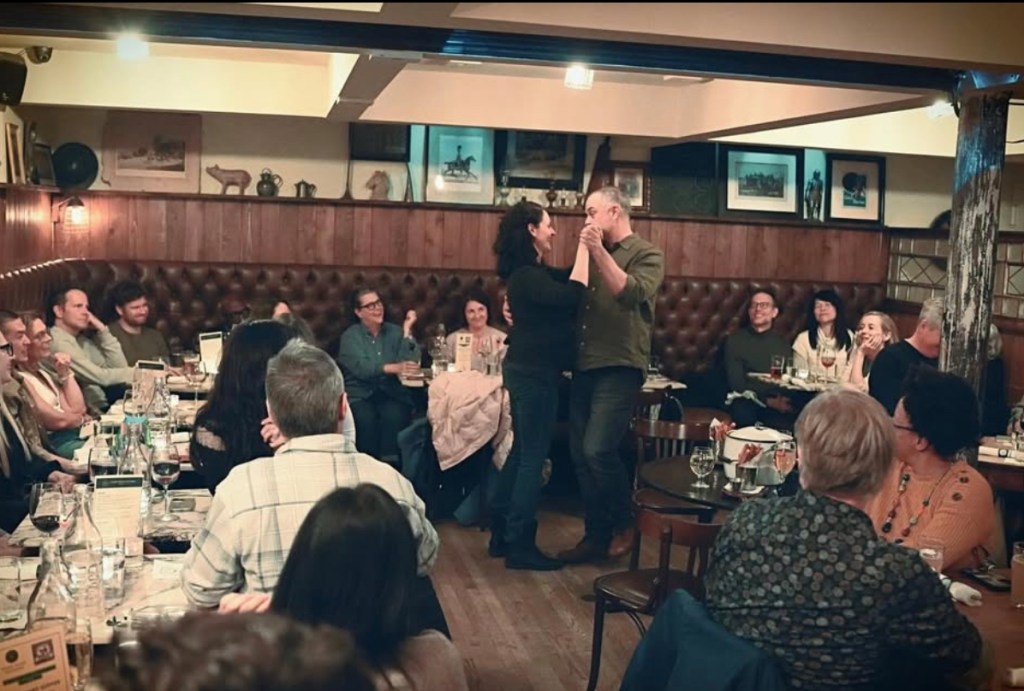
A revolving lineup of four out of the nine core players participates in each performance. The squad takes on four scenes from the Folio and then takes them for a ride. Similar to Shakespeare’s time, there is no one sitting in a director’s chair. Instead, the show is observed by one of three Performer-Producers — Carey Van Driest, Neil Hellegers, and Gabra Zackman — who takes notes about what is working and what could use a tweak. To decide which plays should make up the program, restaurant patrons draw titles from a selection of cards. Attendees at surrounding tables then select the names of the actors to portray each part. This means, of course, that casting is always gender neutral and that every cast member has to know the lines of every role. As a stop gap measure, each has one pass in their actual back pocket that can be executed if they truly draw a blank.
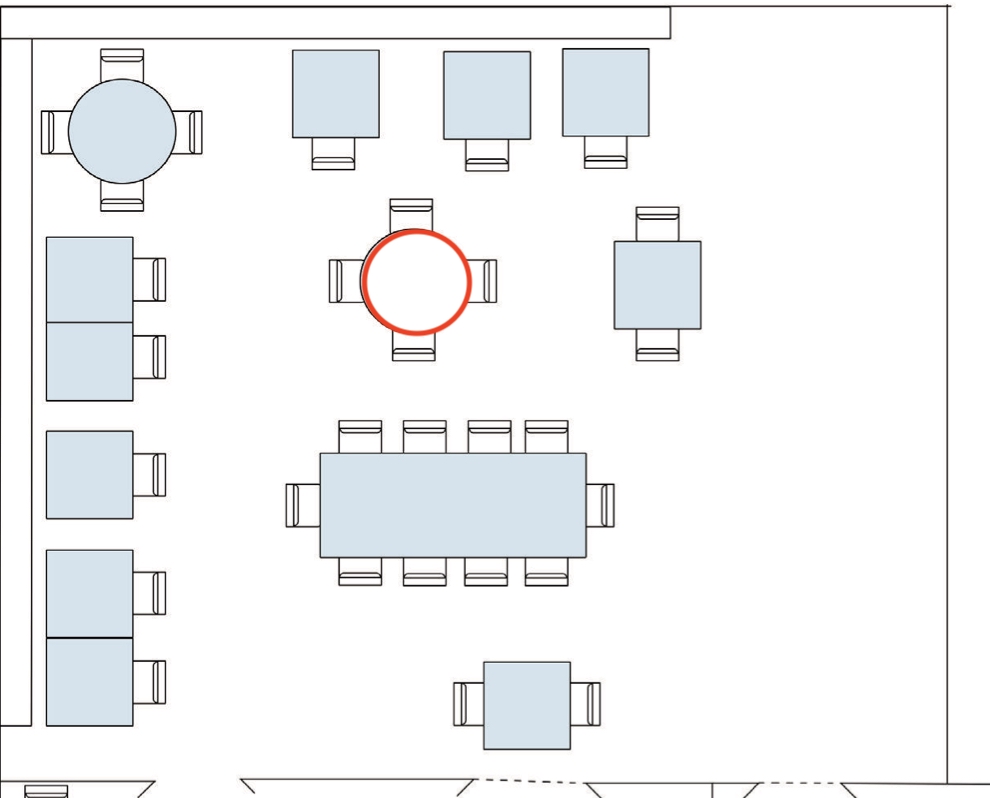
After describing the situation and personage, the actors present the scene as written. The action takes place around and between tables with a two-top at center (in red on the seating chart) reserved for Shakesport’s use. Distractions are plentiful. “Regular” diners are seated in the Jones Wood bar, front patio and garden and all waitstaff activity continues at a normal pace. But these interactions are pushed into the background or playfully incorporated as just part of the fun. Heckling is permitted — nay, encouraged — should one of the Shakesports need prompting for a forgotten line.
After the scene concludes, the improv elements or “rubs” — as in “ay, there’s the rub” — suggested by the ticket holders are pulled from a literal hat and added to the heady brew. The writing of these elements is a way to get the audience involved, build a relationship with them, and give them a sense of ownership in the proceedings. The scene is then adapted, applying these new components. Three of the slips simply say “change roles.” To give you a sense of how a scene might evolve, at the August rendition the cast of Taylor Harvey, Jess Nahikian, Gabriel Vaughan, and Zackman ended up creating a hilarious rendition of MacBeth in a nail salon with two different accents and an exit pursued by a bear. Through all the chaos, the core of the scene remained intact. They made it look easy. It is not.
The Shakesport team’s collaboration with Jones Wood Foundry grew out of a post-pandemic conversation between Van Driest and Jones Wood’s chef and owner Jason Hicks. She had experience bringing Shakespeare to the people through pub crawls and similar public settings. He wanted to bring fun and friendly entertainment into his restaurant. Having also been born in Stratford Upon Avon, iconic Shakespeare turned on its “pate” was an obvious fit for Hicks’ needs.
Hellegers was the next to join the creative discussion about how best to preserve the lyrical language while keeping the stories fresh, flexible and delicious with a side of Yorkshire pudding. Other company participants were recruited primarily from within the professional circle of audio narrators to which Hellegers and Zackman belong. The company is now expanding their reach with an engagement on October 15 at the Phoenix Festival in Nyack. They are also making themselves available for private events. Inquiries can be sent to shakesportnyc@gmail.com or by direct message at https://www.instagram.com/shakesportnyc/.
Shakesport is an imaginative spin on the works of the Bard and a terrific night out. Performances occur on the third Monday of every month at Jones Wood Foundry, a British pub at 401 East 76th. Seating is arranged by the restaurant host and reservations for the 40 seat room are required. Doors open at 7PM and running time is from 7:30 PM to approximately 10PM. Your $60 ticket includes a delicious glass of house wine or draft beer and a choice of a crispy fish sandwich or chicken Caesar salad. There is a menu of snacks and desserts to add at an extra charge. Entrees are served after Act 2. The space has steps and is not fully accessible. Visit https://www.joneswoodfoundry.com/2026/01/28/an-interactive-shakespeare-night/ for bookings and more information.





Lynn Nottage on Mlima’s Tale
Playwright Lynn Nottage is seemingly everywhere. Her wide appeal and astonishing tonal range stretch from the gut-wrenching Ruined to the broad humor of By the Way, Meet Vera Stark. Two of her plays — Clyde’s and Sweat — are among the ten most produced of this year’s season. The operatic version of her drama, Intimate Apparel, for which she wrote the libretto, is currently on PBS as part of their Great Performances series. And she wrote the book for the Michael Jackson jukebox musical, MJ, now playing on Broadway. Her long reach is made possible in part by a form of self-care. She gives herself a mental break from covering thornier issues by simultaneously writing a comedy.
Last Thursday in an evening co-presented by the Center for Fiction in Brooklyn and Theatre Communications Group (TCG), the two-time Pulitzer Prize winner sat down for her first conversation with Damon Tabor. The investigative journalist wrote an article, “The Ivory Highway,” that inspired her play Mlima’s Tale. He had tracked the intertwined entities responsible for the horrendous international ivory trade. Offenders include poachers, smugglers and all-too-knowing buyers. Moved by what she read in his piece, Nottage buried herself in research. It revealed a genuine possibility of a world without elephants and she felt the need to sound an alarm. She educated herself about the communication style of elephants, especially their deeply social nature. Eventually she developed a story from the viewpoint of a rare big-tusker, beginning with his murder and following the trail through all of those who were complicit in his death. She named him Mlima, Swahili for mountain.
The script is structured as a series of one-on-one conversations illustrating the chain as Mlima’s tusks move from one possessor to the next. Always one for putting a face on an issue, Nottage had the lead character of Mlima portrayed by a human actor. This enabled her to let him more easily communicate to the audience and bring his emotions fully into the room. Rather than using the traditional approach of hiring the production crew after the cast had begun their work, Nottage brought the entire team together from day one, resulting in a more cohesive artistic statement. Oscar winning director, Kathryn Bigelow, brought her genuine outrage and big picture thinking to the initial run-throughs. The impactful concept of having Mlima physically leave his mark on all the perpetrators by smearing them in white came from costume designer Jennifer Moeller.
Mlima’s Tale, was nominated by the Outer Critics Circle in several categories when New York’s Public Theater presented the world premiere in 2018 under the direction of Jo Bonney. The book can be purchased here: https://shop.aer.io/tcg/p/Mlimas_Tale/9781559369114-9511. Performances are currently playing at 1st Stage in Tysons, Virginia and due to open soon at the Arsht Center in Miami, Florida. Productions are also being prepared internationally, though significantly not in China where the ivory trade still flourishes.
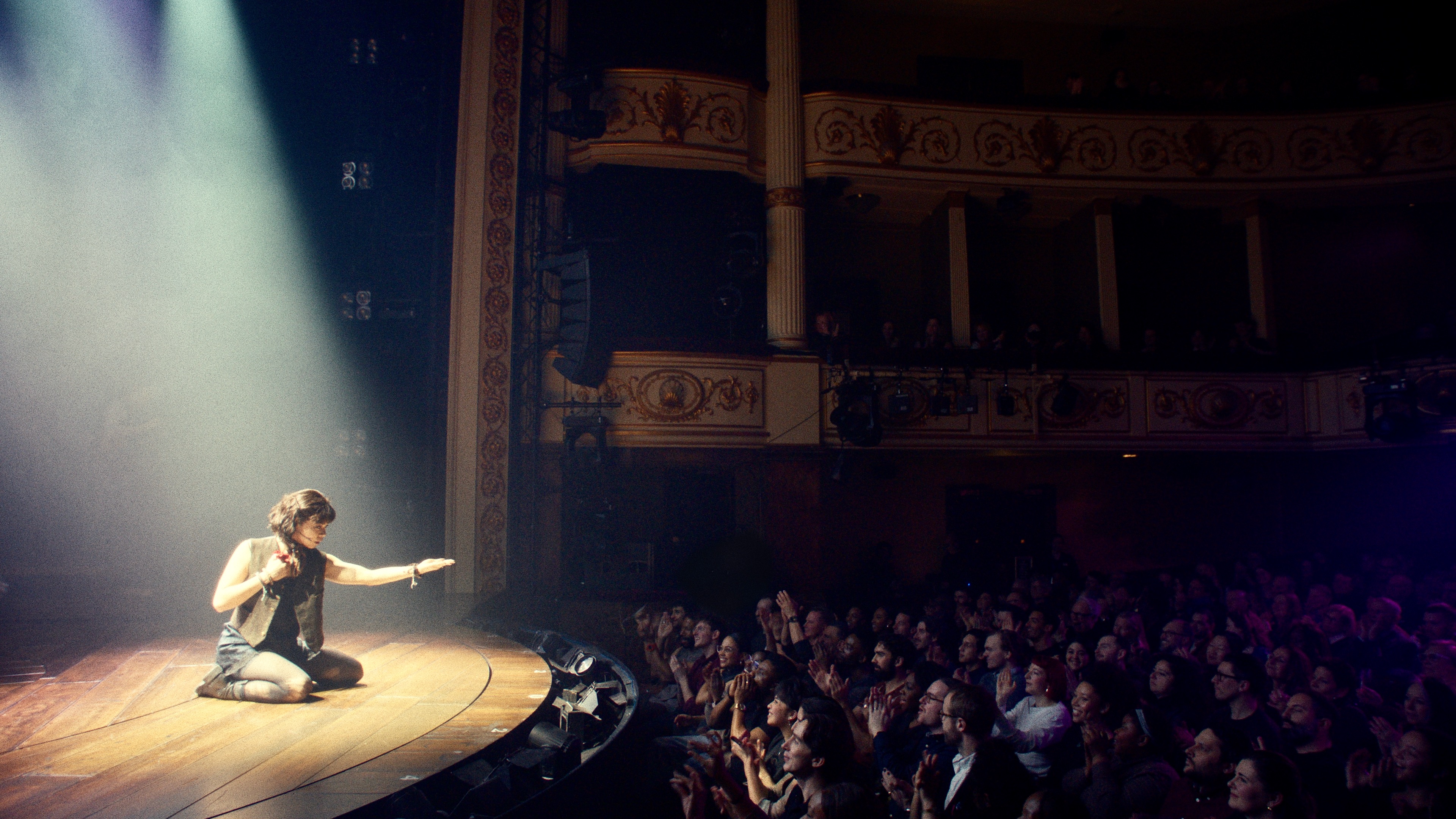
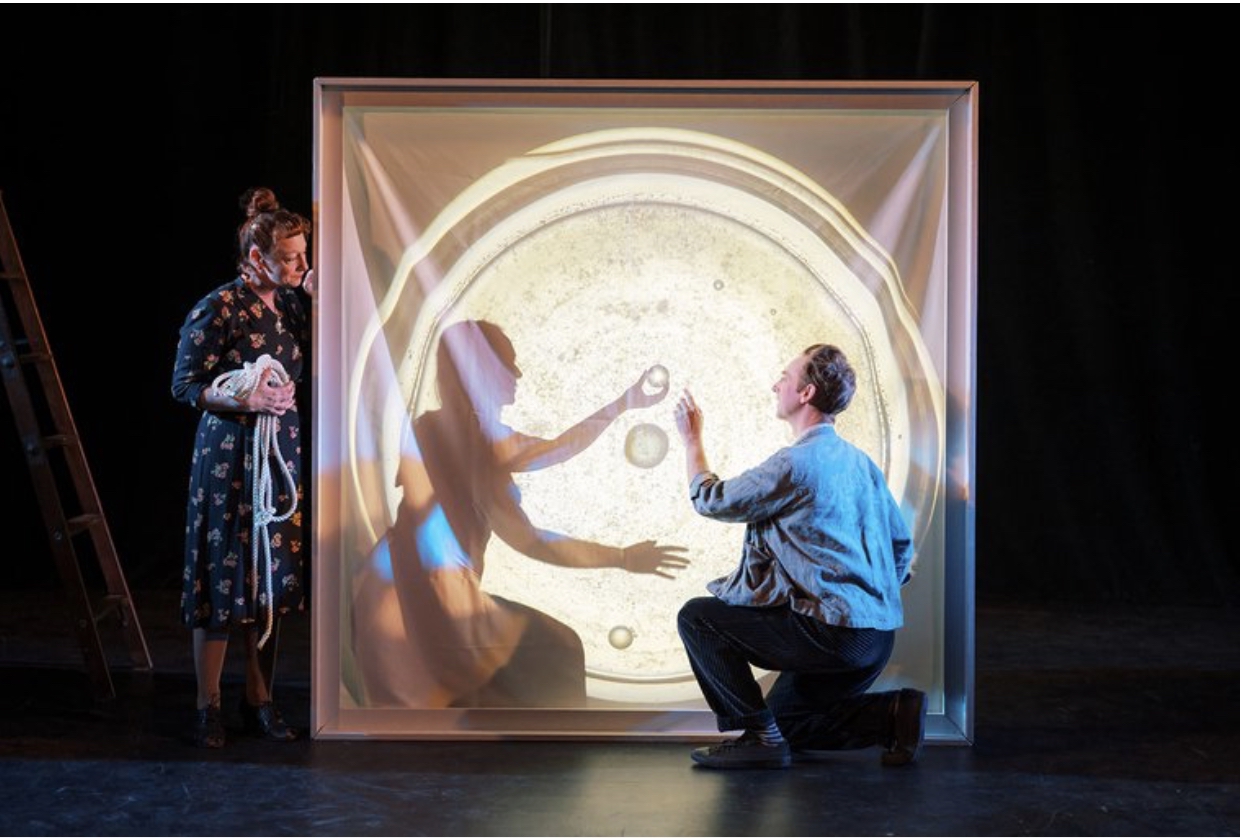
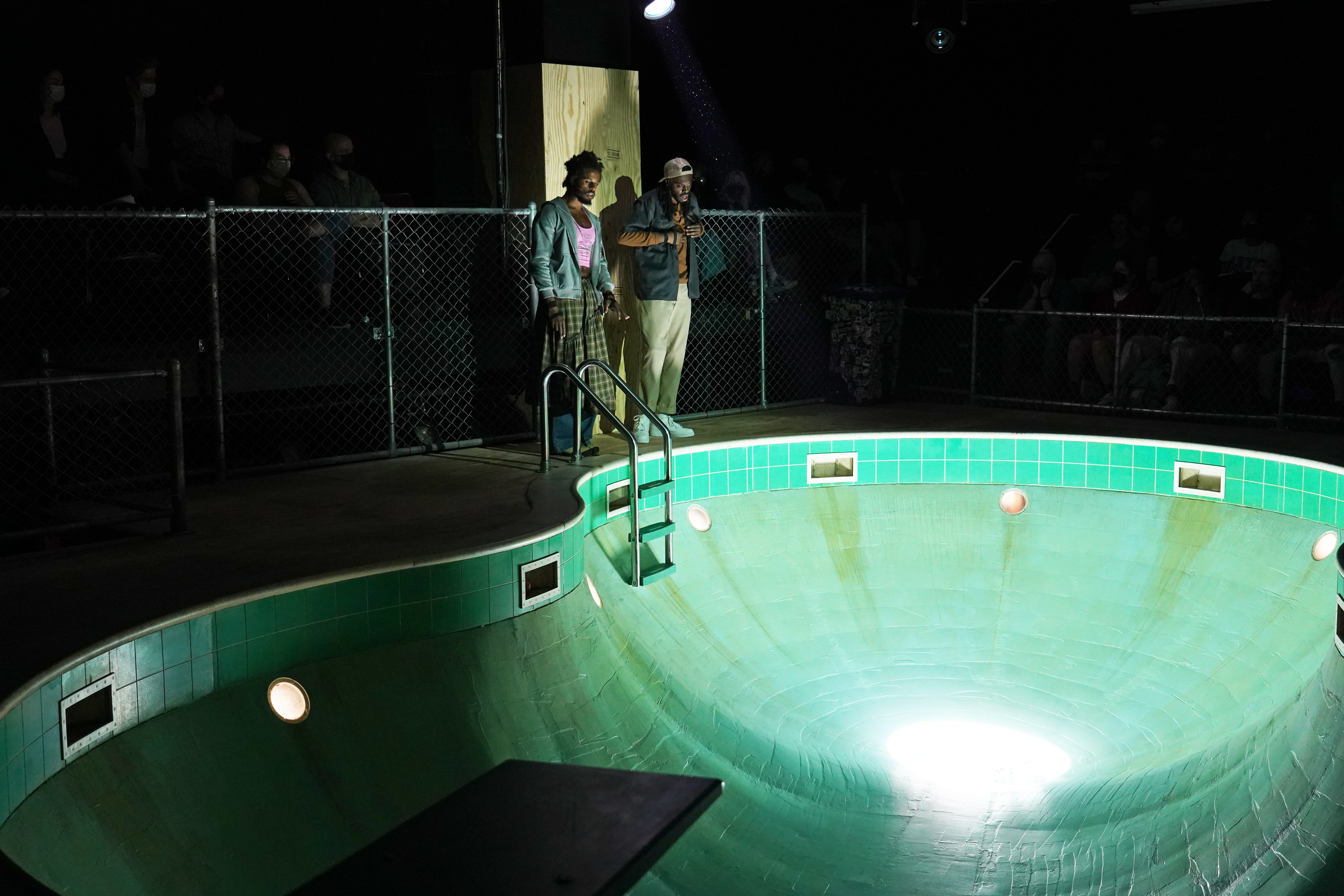
Image: Ito Aghayere, Sahr Ngaujah and Kevin Mambo in the 2018 World Premiere of Mlima’s Tale. © Joan Marcus.