Category Archives: Off-Broadway

Predictor

Too few productions hit that magical sweet spot of addressing a pressing issue while remaining entertaining and even funny.  This is what makes Predictor such a refreshing addition to the winter Off-Broadway lineup.  Jennifer Blackmer has written an inspired bio-comedy about Meg Crane, the inventor of the home pregnancy test whose name has been all but erased by the male-led corporation that swindled her out of her patent.  Choosing her words and micro aggressions with loving exactitude, Blackmer combines fact with recognizable cultural references circa 1967 to fill out Crane’s little-known history.  It is no surprise that the 2024 winner of the  American Theatre Critics Association/Harold and Mimi Steinberg Foundation Citation for Best New American Play (for I Carry Your Heart With Me) would tell this story with artfully applied fury and humor.

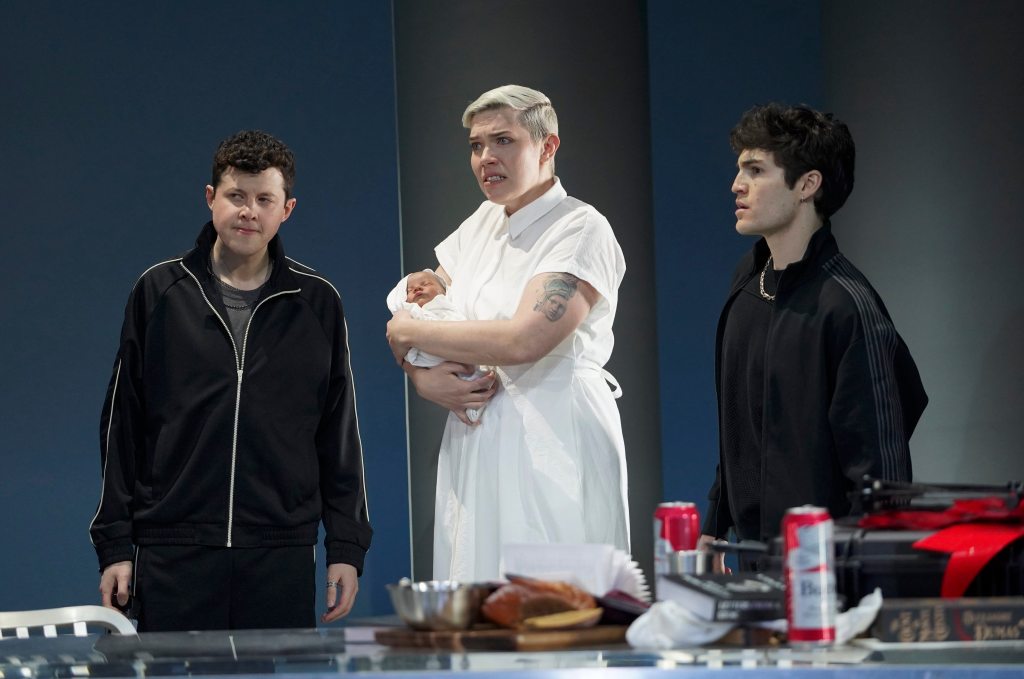
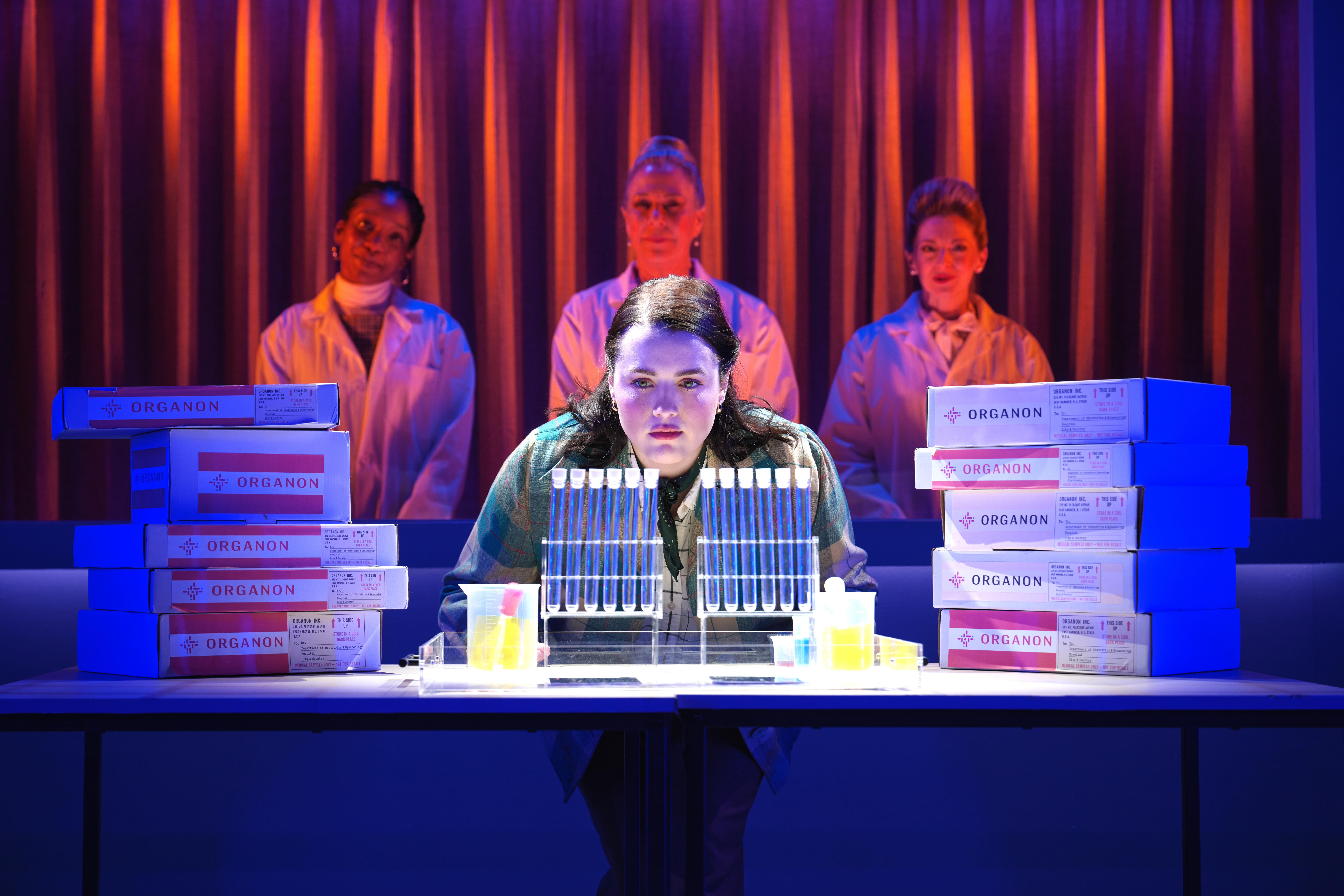
Predictor featuring Jes Washington, April Ortiz, Lauren Molina (r) and Caitlin Kinnunen (f);
Photo credit Valerie Terranova

Though fans of Mad Men are well acquainted with the corporate culture of companies like Organon Pharmaceuticals, it may be hard for anyone under the age of 40 to picture a world in which a woman’s husband had to accompany her to a physician’s appointment.  Then she would wait several crucial weeks in order to know for certain whether or not she was pregnant.  Blackmer uses the popular television of the times including a Donna Reed-like family portrait and a buzzy game show to convey the impactful images and genuine emotions related to this lack of agency.  The sound design by Daniela Hart, Noel Nichols, and Bailey Trierweiler includes original music that invokes the tunes and tones used in these programs, adding an intergenerationally-familiar period element.  Cat Raynor’s scenic design features medicinal green walls, delightfully dated harvest gold chairs and an upstage glass enclosed “control booth”.   These enhance the storytelling while also providing the small stage space with an expansive feeling.  Colorfully illuminated side panels similar to ones used on TV are incorporated into the lighting design by Zach Blane.  Like parochial school uniforms— another theme from Crane’s life —  costumes by Alicia Austin consist of coordinated plaid dresses for the ladies and suits for the gentlemen who grab sweaters, jackets, and glasses to differentiate their multitude of characters.

Alex Keegan’s deft direction fits each script beat so perfectly she and Blackmer could be creative twins.  The action all takes place inside Meg’s head and has both very real and very dreamy qualities as a result.  The essential Meg Crane character is played by Tony nominee Caitlin Kinnunen, who came to prominence during her run as Emma Nolan in The Prom.  She lends that same flustered-but-right affectation to the graphic artist who finds her muse in an outer building of a pharmaceutical company.  Kinnunen is lifted up by a crack ensemble with seemingly boundless energy as they take on a broad range of supporting roles.  Lauren Molina can add “credible tears on cue” to her many hyphens with her compassionate turn as Crane’s deeply religious mother as well as Mary, a comically earnest executive assistant.  April Ortiz gives depth to the more conservative female roles including Crane’s teacher Sister Bernadette and Crane’s grandmother.  Nick Piacente is flirty and sweet as Bertie, a friendly lab assistant, and Ira, an experienced marketing executive.  Amping up the blowhard factor is Eric Tabach’s Jack, the executive to whom the home pregnancy project is assigned.  Taking on both father figures and Crane’s actual father is a down-to-earth John Leonard Thompson.  A refined Jes Washington portrays Jody, Crane’s encouraging roommate, and Lillian, a troubled secretary from Organon’s pool among others.

Predictor paints a vivid backdrop to our times when Roe is gone, Planned Parenthood is under attack, and the FDA itself is being tested.  But it also provides a portrait of a selfless and remarkable crusader and moments of genuine laughter.  While you may feel Crane’s grit and frustration, ultimately its exhilarating to share time with her and Blackmer’s sharp dialogue.  Predictor runs through January 18th at The AMT Theater, (354 W 45th St) with performances at 7PM Tuesday through Sunday and 2PM matinees on weekends.  Runtime is two hours and fifteen minutes including an intermission.  The house is small, but comfortable with good sightlines even from seats against the far wall.  Tickets ($49-$110) are available for advance purchase at www.predictorplay.com.

Archduke

Of all the action leading up to World War I, the chapter most remembered by students of that era is the assassination of Archduke Franz Ferdinand, heir to the throne of the vast Austro-Hungary empire.  In Archduke, playwright Rajiv Joseph focuses less on explaining the political situation and more on the young, inept members of the assassination team.  Less interested in portraying history than in tinkering with it, Joseph compresses the time frame and leverages the lore surrounding the trio, particularly the role a sandwich played in the mythologizing of the bungled plot.

Set in the days leading up to the murder, there exists in Archduke a backbone of facts, from an overview of essential geography to pairs of uniting black gloves, a nod to the Black Hand nationalist group that aided in the real boys’ training.  Joseph recruits the Serbian Nationalist army officer and likely organizer of the plot, Dragutin Dimitrijević — better known by his nickname Apis — as a main character.  Religion is both a comfort and a tool for manipulation, with dreams, beliefs, and conscience playing roles equal to struggle for state independence.  In concentrating his story on the indoctrination of vulnerable teens, Joseph brings modern depth and understanding to a long-ago event.

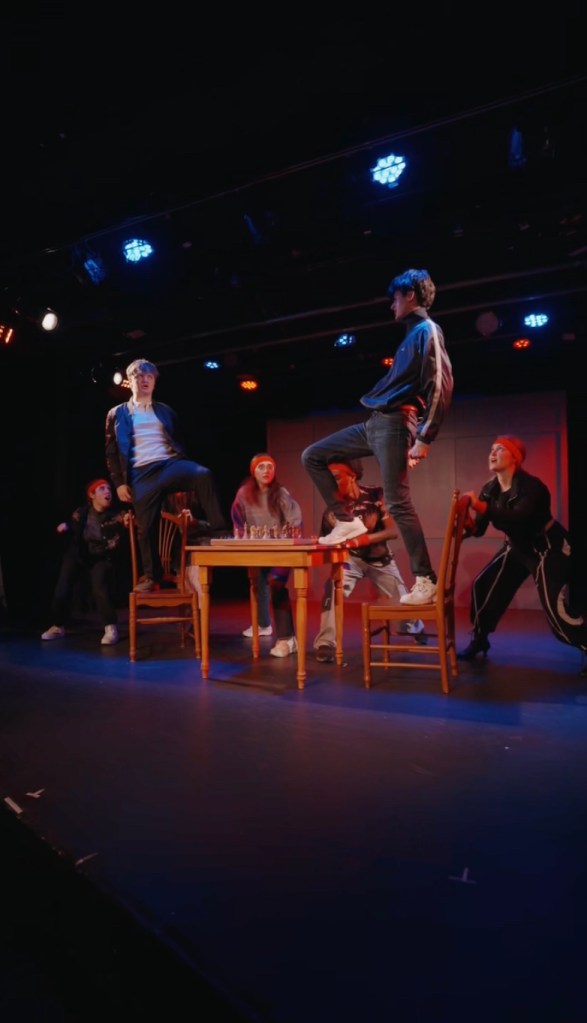
Under the direction of Blanka Zizka, the artistic production at Philadelphia’s Wilma Theater in the spring was steeped in Eastern European influence. Serious themes of violence and conflict were mixed with theater of the absurd and old fashioned clowning.  Two middle aged women took on the roles of Gavrilo (Suli Holum) and Nedeljko (Sara Gliko) skillfully infusing their characters with adolescent discomfort.  The third less showy would-be assassin, Trifko, was played with comparable gravitas by Barrymore Award winner Brandon J. Pierce.  Steven Rishard with his Baldwinesque delivery portrayed Apis as a blustering moody fatherly figure.  For the lone female, Apis’s housekeeper  Sladjana, Zizka employed Black company member Melanye Finister, who gave the character a true touch of the Black Arts.

There was heavy emphasis on 3-D imagery designed by Jorge Cousineau to augment Thom Weaver’s traditional lighting that illuminated the vast dark space.  Intense projections reminiscent of the black light shows of the Czech Republic were among the most memorable features. So mesmerizing were the effects and so memorable were Zizka’s choices that the visual impact upstaged whatever was on the page.

I had the opportunity to revisit Archduke as Roundabout’s Off-Broadway fall offering.  Their rendition is directed by Darko Tresnjak who was born in Zemun where much of the action takes place.  As his set designer, he chose to work with frequent collaborator Alexander Dodge who emphasized topographical and language boundaries to set the scene.  More like acrobatics, the fight scenes with movement by Rocío Mendez have dance-like athleticism.  Gavrilo’s haunting visions are given aural presence in Jane Shaw’s sound design, but the images are left to our imagination.  

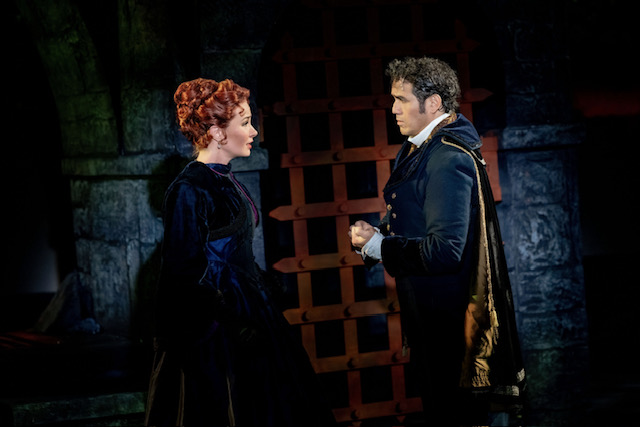
Patrick Page, Jason Sanchez, Adrien Rolet and Jake Berne in Archduke; photo by Joan Marcus

Tresnjak’s Gavrilo and Nedeljko are Jake Berne and Jason Sanchez, young men making their Off-Broadway debuts.  The third assassin in training is portrayed by Londoner Adrien Rolet in his first professional role.  There is a delightful freshness to all three performances.  As for the calculating Apis, Patrick Page, whose voice has become synonymous with chilly seduction, gives him a lowkey “I’ve got this” vibe.  Another Broadway vet, Kristine Nielsen, gnaws on Sladjana’s lines, coming across like a bewitched herbalist.

That two respected companies in two terrific theater cities — Philly’s Wilma and New York’s Roundabout — chose to include Archduke in their 2025 season is significant.  In a way, the script shares characteristics with the history that inspired its writing.  It isn’t the strongest of Joseph’s work which makes it ripe for differing emphasis and interpretation.  With all the talk of masculine toxicity taking up space in our national conversation, it’s important to be reminded that free will can overcome even the most enticing manipulation.

Archduke continues at the Laura Pels Theatre, 111 West 46th Street, through December 21.  Running time is about 2 hours with one intermission.  Tickets start at $69 and can be purchased at https://www.roundabouttheatre.org/get-tickets/2025-2026-season/archduke.

Friends! The Unauthorized Musical Parody

My friends will confirm:  I am not a Carrie, Miranda, Charlotte or Samantha.  I am a Monica.  If that doesn’t conjure up a distinct image, Friends! The Unauthorized Musical Parody is not for you.  If I have to explain that the plot revolves around six 20-somethings living a suspiciously upscale lifestyle in 1990s Manhattan, you are unlikely to be in on the jokes.  From the Smelly Cat cocktail onward, this two-hour jovial send-up is for fans who indulged in repeated TV viewings (thank you streaming).  The current open-ended Off-Broadway run began in 2021 and has spawned productions across the country and overseas.

The current core cast members — Francesco DiFlora, Anthony Gjelaj, Corinne Holland, Piper Loebach, Sam Massey, and Briana Sky Riley — remind us how gifted actors give their all for love of the craft in its myriad forms.  They have wonderfully clear voices and terrific timing beyond what is required for a light-as-a-feather production like this one.  DiFlora in particular must be eating his Wheaties (or whatever kids do these days) taking on a host of supporting roles along with the much beloved Chandler Bing.  And Holland’s Phoebe gets that hopeful opening guitar strum just right every time.  Andie Angel played the suitably thankless role of Gunther at the performance I attended.

The book by Bob and Tobly McSmith isn’t particularly clever, instead leaning into token tributes to every trope and tag line of Friends’ 10 year run.  Their lyrics set to Asaf Gleizner’s music are sharper, with the winking “495 Grove Street – How Can We Afford This Place?,” an ode to Pivoting, and a salute to salaries — set to a tune quite similar to one sung by a very different group of buddies — providing highlights.  The pre-recorded back-up chorus (sound design by John Hartman and Brad Sievers) adds depth in the shallow house.

Director Ryan Barto keeps things moving on the singular set with flipping panels that switch between Central Perk — New York City’s only coffee shop — and Monica’s spotless apartment complete with purple front door. There is not much in the way of character development.  The assumption is you know these people as well as you know your actual friends.  But the wigs by Conor Donnelly do more than the usual share of heavy lifting when it comes to helpful visual reminders.  

Friends! The Unauthorized Musical Parody is to the performing arts as Cheez Doodles are to Époisses de Bourgogne.  It offers suitable bang for the buck and goes down well with a Janice Double Wine.  The show is playing at the Jerry Orbach Theater, 210 West 50th Street, 3rd Floor.  The seats are softer than a sofa found in an alleyway, but the staff is as warm and gracious as the one at the newly reopened Waldorf.  Running time is approximately 2 hours with one intermission.  Content is PG-13 and will be funniest to those fluent in Friends culture.  Tickets are currently on sale through January 1 at https://www.friendsoffbroadway.com/ which often has BOGO offers.

Meet the Cartozians

What establishes our identity?  Skin color?  Language?  Scientific evidence?  In a country comprised primarily of immigrants, how do we balance our cultural heritage with our recognition as Americans?  In Meet the Cartozians, Talene Monahon, “a playwright of actor descent,” explores these weighty and often murky issues with keen insight and a knowing sense of humor using an Armenian family as her instruments.  With its complex history and even more complicated geography,  Armenia provides a wellspring of arguments about nationality, culture, and sense of self.  And if the play’s title brings to mind the most famous Armenian American of all, that, too, is very intentional.

In Act 1 we meet Tatos Cartozian, a character based on the man who was at the center of an Oregon court case in 1924.  As was true for the real Tatos, Monahon’s variation has been classified as a non-white Asian and on those grounds had his citizenship revoked.  It does not help his argument that his company makes Persian “oriental” rugs and employs “Islamics”.  To say more would detract from the delights of experiencing the reasoning of the family — Tatos’s mother Markrid, son Vahan, and daughter Hazel — along with their lawyer Wallace McCamant as he guides them in their preparation.  Monahon’s ear for dialogue and director David Cromer’s meticulous direction of each exchange should be freshly savored.

Act 2 takes place 100 years later in the Glendale, California home of Leslie Malconian. Several other Armenian Americans have been asked to gather with her to discuss and celebrate their ancestral heritage.  Their conversation will be featured in a special holiday episode of a wildly popular reality television show.  Despite the passage of time as well as that of many congressional bills, the subject of whiteness is no less thorny.  But it has taken on a very different hue.

The same six actors — Raffi Barsoumian, Will Brill, Andrea Martin, Nael Nacer, Susan Pourfar, and Tamara Sevunts — play parts in both acts.  Martin delivers her characters’ retorts with the wry “who me?” inflection we’ve come to expect from the seasoned comedian.  Fellow Tony winner Will Brill gets even bigger laughs with his quiet earnestness.  But a work this dialogue-heavy only succeeds because of the talent of the entire ensemble. The 2 ½ hour piece sails along at a satisfying clip.

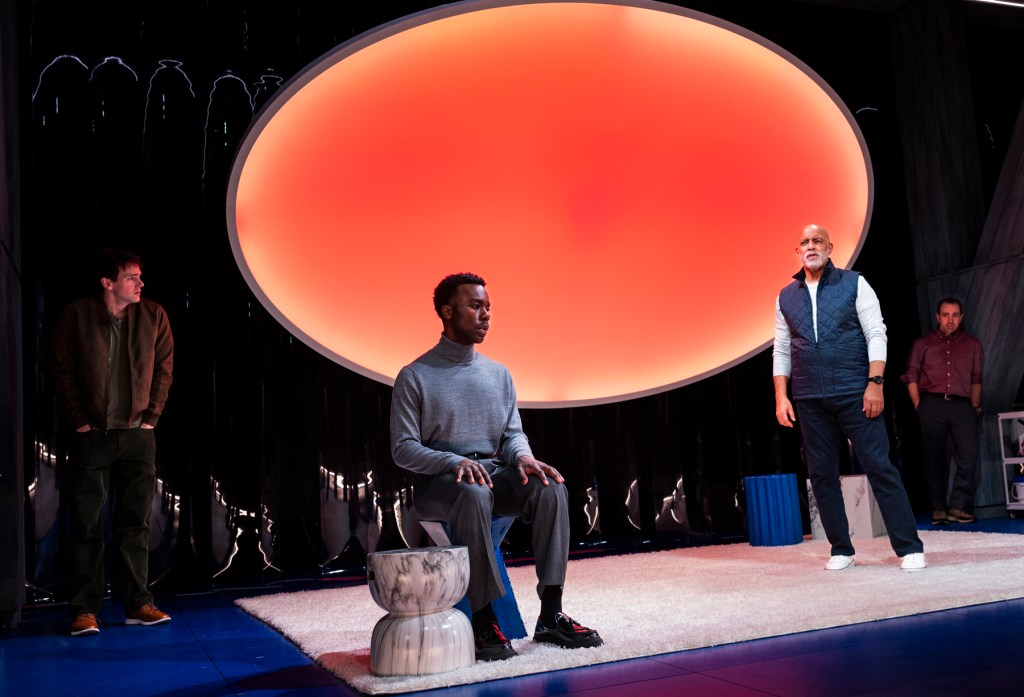
Will Brill, Andrea Martin, Nael Nacer in MEET THE CARTOZIANS ; Photo by Julieta Cervantes.

The artistry behind the scenes is equally accomplished, particularly Enver Chakartash Act 2 costumes in relation to their Act 1 counterparts.  Scenic designer Tatiana Kahvegian creates the illusion of expansive depth in both living room settings.  Stacey Derosier’s lighting shifts from the muted tones of low watt bulbs and filtered sunlight to the intensive glare of actual spotlights.

Those who, like me, consider our country to be less of a melting pot and more of a stew — with distinct ingredients that complement each other — will find the brainy banter of Meet the Cartozians a sparking and engrossing entertainment.  The story also serves as eye-opening education as we witness a renewed struggle against those who wish to “preserve America’s white, Christian identity”.  It’s an auspicious opening for the 47th Season for celebrated 2nd Stage.  Performances continue through December 7 in the Irene Diamond at the Pershing Square Signature Center, 408 West 42nd near 10th Avenue.  The house is comfortable and well raked, but noticeably breezy.  Tickets begin at $86 and can be purchased at https://2st.com/shows/meet-the-cartozians#info.

Perfect Crime

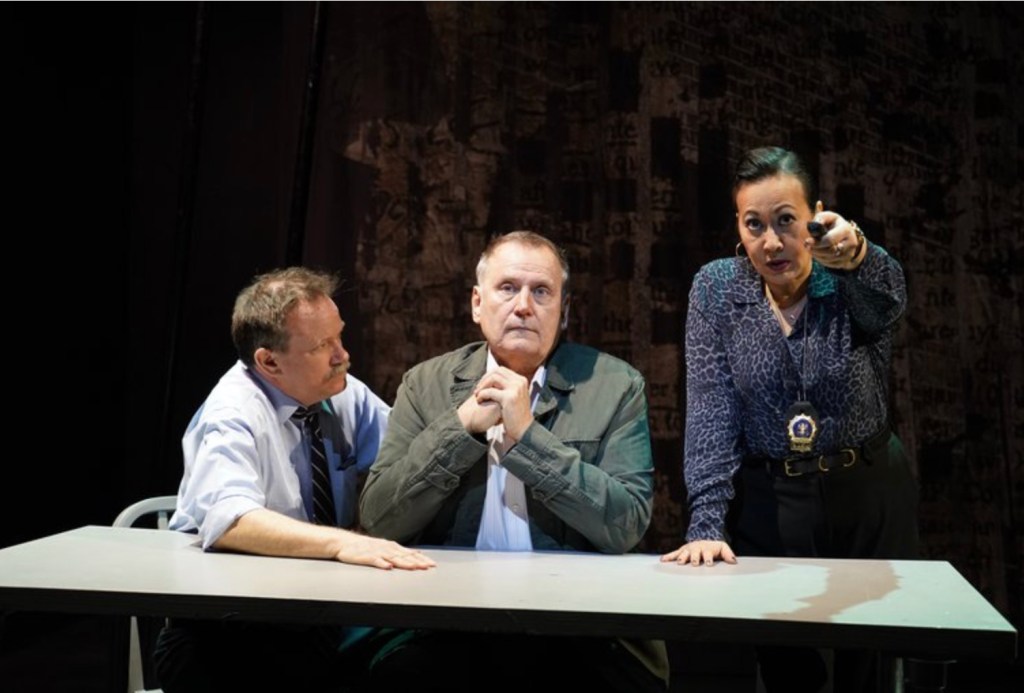
In a secluded stately home in the Connecticut woods, a married team of well-educated psychiatrists uses psychodrama to help their troubled patients work through trauma.  One night, their cook witnesses a young redhead murdering the husband.  A handsome police detective is called to the scene.  The therapists claim it was merely a client acting out a dream.  A series of clues to the truth are dropped over seven scenes representing a single week.  This is the set-up of Perfect Crime, an Off-Broadway mystery with a record-breaking run.  So why is this production still so unsure of its storytelling capabilities that each audience member is handed a 17 point solution sheet upon exit?

The viewing experience begins cleverly enough.  The comfortable lobby centers on a massive mugshot board with a bucket of props beside it for taking selfies.  Tips for committing the perfect crime are hung on the the pillars around a welcoming bar offering an array of theme cocktails.  The producers have thoughtfully paid for Wordly, a translation and caption service that can provide the play’s dialogue in a number of languages.  

Upon entry to the 194 seat house, one sees an authoritative set designed by Jay Stone dressed with Neo-Gothic furniture and leather bound books.  Other creative elements could use an update.  An intricate brick mural that provides a critical plot point has become dull with time.  A talk show clip obviously filmed years ago no longer fits the time frame.  Musical cues, though significant to the plot, are loud enough to intrude on conversation and an important recorded message has become garbled.  

Playwright Warren Manzi, a Yale School of Drama graduate, wrote the original script for Perfect Crime when he was only in his mid 20s.  Reviews at the time indicated it was too complex to absorb, so he continually refined it.  Mr. Manzi’s legal counsel is executive producing the current run.  The piece still begins with a stereotypical phone call in a storm, but this is quickly revealed to be part of a therapeutic reenactment.  Along the way, there are several of these unusual, even sophisticated elements.  

It is the performance of Guinness Book of World Records holder Catherine Russell as famed therapist Dr. Margaret Thorne Brent that makes this playful mystery descend into rubbish.  Lines are ejected from her mouth without any differentiation, as if written as a single run-on sentence.  She never genuinely reacts to any of her scene partners, a basic tenet of the craft.  Her physicality is equally hasty.  For example, when her character juggles multiple phone calls, she often forgets to press the hold button on the phone until she has spoken several sentences to the incorrect person.  I found references to Ms. Russell’s somnambulism dating back at least three years.  The Show Score — usually an enthusiastic measurement — stands at equal parts positive and negative.  She may pride herself on only missing four performances over the years, but in all the important ways she has stopped showing up.

The rest of the cast, most of whom are making their Off-Broadway debuts, struggle along with what they are handed.  David Butler is the most successful as the multi-layered W. Harrison Brent.  Taking on the role of the bored and probably alcoholic Inspector James Ascher is a charming Adam Bradley.  I had the pleasure of seeing Mark Epperson — understudy for all the male roles — as Lionel McAuley, a particularly unhinged yet clever patient of Margaret’s. Seen only on video, Patrick Robustelli plays talk show host David Breuer.  

Catherine Russell was a treasured member of the theatrical community.  Her image was captured by famed illustrator Al Hirschfeld. She was a lead producer of the legendary revival of The Fantastics.  Her proceeds were used in part to build The Theater Center which houses Perfect Crime and several other stages that can be rented out for daring works in development and entertaining parody musicals.  Why, in a time when theater is under threat and yet remains filled with energetic talent, has she chosen to turn in a thoroughly careless performance devoid of heart? That, my dear readers, is perfectly criminal.

Perfect Crime is playing at the Anne L. Bernstein Theater at The Theater Center, 120 West 50th Street. Seats purchased through numerous discounted services are assigned by the box office, which stuffs the first few rows of the low raked house.  Performances are evenings Thursday – Tuesday with matinees on Saturday and Sunday. Running time is about two hours with the intermission.  A detailed plot is available on Wikipedia, which would add greatly to your ability to follow along with the curveballs. For more information, visit https://www.perfect-crime.com.

Triplicity

Talking Band has been generating their unique brand of performance art for more than 50 years.  Last year, they received a Lifetime Achievement Obie Award for their whimsical thought provoking body of work, which includes Painted Snake in a Painted Chair (2003), Panic! Euphoria! Blackout (2010), and Shimmer and Herringbone (2024).  Their latest creation, Triplicity (rhymes with simplicity), fills their singular mold with its poetic storytelling, musical interludes and distinctive movement. Written and composed by founding member Ellen Maddow, it follows three people whose lives fleetingly touch as New Yorkers often do.  Adding a score to their communion is an attuned street performer stationed near the West Village Path train.

Anna Kiraly’s staggered set is suggestive of distinct yet related households, with welcoming doorways and windows that are more light display than light admitting.  A small projection screen stage right provides a musical title for each scene.  The only pop of color is behind the musician who is aptly named  Calliope after the muse of epic poetry.  The character is brought to blazing life by the one-of-a-kind El Beh, a performer with too many hyphens to list.  Costume designer Olivera Gajic has likewise saved her most vivid selections for this unique goddess, at one point reminding us they are the key by dressing them in keys.  The lighting design by Mary Ellen Stebbins by turns unites and divides the characters with cool pools.  

Though small, the cast well-represents the broad range of generations, appearances, and sensibilities of a New York City neighborhood.  The first resident we meet is Frankie, a retired bookkeeper played by Talking Band regular Lizzie Olesker.  At first she shrugs off her days as repetitive and grey, but they take on definition with each recounting.  Next we are introduced to an empathic budding non-fiction writer, an exuberant Amara Granderson.  Rounding out the unlikely trio is an exterminator from Bay Ridge with a soft spot for bee hives.  Steven Rattazzi’s rendering is so genuine, one could reasonably expect him to change into work overalls and grab a bag of sticky traps post-show.  The triad is doing its best to give each day a purpose and act responsibly.  With choreography by Sean Donovan and Brandon Washington augmenting Artistic Director Paul Zimet’s stage direction, the stories flow one to the other with phrases and key words echoed by Calliope’s dramatic accompaniment and wardrobe.  As Frankie often says, “That’s all; that’s it.”  But often that’s more than enough.

Steven Rattazzi and Amara Granderson in Triplicity; photo by John David West

Triplicity is a quieter piece than some of the Talking Band’s more overtly political work.  But it’s as diverting as a warm afternoon in Christopher Park.  The plot’s interlacing threads work as a reminder that ultimately we are in this life together.  The limited run is at Mabou Mines, a comfortable six row house at 122CC, 150 First Avenue between 9th and 10th Streets.  The performance schedule is Mondays and Wednesdays – Saturdays at 7pm with matinees Sundays at 2pm and an additional 2pm performance on Saturday, October 25. Running time is 70 minutes without intermission.  Tickets are $30/$40 and available for purchase at www.talkingband.org/triplicity.

The Glitch

In a world in which AI has seemingly infiltrated every aspect of life, it is not hard to imagine a lab like the one featured in Kipp Koenig’s The Glitch.  “Future Child” allows want-to-be parents to interact with DNA-based projections of their teenage offspring.  The technology orchestrated by Aurora — an AI combination therapist and diagnostic program — is still a work in progress.  The simulation developed for their ninth client hit a raw nerve and resulted in an unanticipated traumatic reaction.  After a great deal of upgrading and testing, company founder Wyatt and his more cautious second in command Wendy feel prepared for client #10.  But when she turns out to be a woman from Wyatt’s past, the outcome of If/Else commands becomes even less predictable.  

Though the question of whether AI is capable of improving our quality of life drifts along in the background, front and center are more approachable and relatable topics.  What parent isn’t terrified of giving birth to someone who might not be “good” in the way they envision?  What child doesn’t say something hurtful in haste or engage in a rash act of rebellion?  And who hasn’t experienced that moment of horror when the sound of their parents comes flying out of their own mouths?  

Koenig has clearly drawn from his years working in technology to concoct the plausible atmosphere of a visionary and delicate start-up.  Scenic design by Josh Oberlander featuring hospital-white blocks and levered doors gleaming under Zack Lobel’s bright florescent lighting accompanied by Philip Glass-y music brings us right into the scene.  Director Mark Koenig (no relation) makes clever use of the aisles to expand the movement of the highly conversational script. Though there are a few too many short cuts in the plotting, they are necessary for squeezing all the required thought and sentiment into a tight 100 minute package.

Danielle Augustine and Jacquie Bonnet in The Glitch; photo by Thomas Mundell

As Hailey the holographic daughter, Hannah Rose Doherty is a revelation, striking the perfect vocal tone of a tween at once loving and frustrated.  At times she was little more than 3’ from me.  Covered in silvery sparkles, she remained engaged and reactive: physically exploring her “projected” body, flipping her hair before she was given arms, and quivering with excitement as she was allowed to develop.  The comic relief lands primarily in the feet of Jacquie Bonnet’s Wendy.  Both the actress and the character deserve a more meaningful domain given the story arc.  A grounded Sunny Makwana brings warmth and the right touch of neurosis to the Omar Sharif-loving Wyatt, providing sufficient credibility to the string of coincidences in the story.  This makes for a less persuasive connection with Danielle Augustine whose Amy sounds forced.  To be fair, the actress is challenged by prolonged interaction with a disembodied voice and having to express a complex emotional life based on falsehoods.  The commanding presence of Aurora is given breadth and wit by Amilia Shaw, who takes a well deserved bow with the rest of the three dimensional cast.  

At a time when so many playwrights are exploring current events with fear and loathing, it’s refreshing to see playwright Koenig take a different path.  The Glitch proposes that with kindness and compassion tempered by a dose of healthy skepticism we are still capable of doing good for one another.  You can experience this for $50 ( $70 if you’d like to increase your support to premium level).  Performances are 2PM Wednesdays, 4PM Fridays and 6PM Sundays.  The limited engagement at The Theater Center, 210 West 50th near Broadway, ends November 2nd.  Visit https://theglitchplay.com/ for a sneak peek and purchasing information.

This is Government

There is a mighty fine line between “timely” and “too close to home.”  No one at 59E59 could have predicted that Trump ally and conservative activist Charlie Kirk would be shot and killed a few days after This is Government began previews.  But the horrifying uptick in our political violence had to be on the minds of everyone watching a play about a bomb threat taking place outside a Washington D.C. Senate office building.  While Nina Kissinger has infused her dark subject with humor, it feels too gracious to meet the brittle moment.

Scenic designer Daniel Allen sets the scene within an off-kilter office.  To serve the direction, file cabinets are piled across the back in a staircase formation and the third desk floats chairless mid-stage.  Within these strange walls are the interns for Senator Bachmann whose vote will determine the fate of a critical healthcare funding bill.  Rudderless and crippled by anxiety is recent college grad Emi (Kleo Mitrokostas).  One year younger, Tip (Charles Hsu) is four times more interested in influencing the world through his monologues than within the bureaucratic structure.  Their supervisor is former intern Kaz (Vann Dukes), a non-binary pragmatist with political ambitions of their own.  The three have been receiving regular calls from Stevie (Susan Lynskey), whose pleas to speak with the Senator have grown increasingly frequent and agitated.

Mitrokostas and most of the creative team are resident artists of the New Light Project which co-produced with Pendragon Theatre.  Director Sarah Norris has done what she can to mine the script for variation, but a regular rhythm sets in quickly.  Tip attempts to lead the way with dramatic flair and a touch of recklessness driven by his romantic world view.  Draped in mismatched navy business casual (Krista Grevas, Costume Design), Emi follows with apprehension and self-doubt.  At intervals, the passage of time literally ticks by (Jennie Gorn, Sound Design), the lights flicker (Hayley Garcia Parnell, Lighting Design), and someone climbs the cabinets to move the clock hands forward (Yasmyn Sumiyoshi, Movement Direction).  There surely was a more impactful way to illustrate the “real-time consequences” that should be driving the action.

Kleo Mitrokostas and Charles Hsu in This is Government; photo by Burdette Parks

Much of the opening banter is character background and a the building of a familiar framework of government by bluster.  When Kaz surrenders to Tip’s plan, the plot takes on more elements of a detective procedural.  But Kissinger hasn’t so much dropped breadcrumbs as built a pullman loaf walkway.  There is less talk of fueling political change than there is of understanding the bomber’s motives.  The serious exploration of meaningful themes is obscured by broad comedy and near absurdism.  The fates of our would-be heroes feel underdeveloped and ultimately unearned.

Nina Kissinger is a distinguished voice in new generation of playwrights. But though it has been only three years since This is Government won the Agnes Nixon Playwriting Festival at Northwestern University, the political landscape has shifted sharply and is less supportive of her message.  At the performance I attended, nearly half the audience was under 30.  In her curator’s note, Artistic Director Val Day says she hopes these Gen Zers will hear this piece as a call to action.  I sincerely hope they do, even if it’s to gather for another shared experience at live theater.

This is Government is playing in Theater B at 59e59 Theaters, 59 East 59th Street in Manhattan.  Tickets are $44 and available at https://www.59e59.org/shows/show-detail/this-is-government/.  Running time is approximately 85 minutes without intermission.  Content is recommend for those 14 and up.

The Lights Are Bright Off Broadway

The New York theater scene is most often associated with Broadway, but there is a diverse audience that actually prefers to head Off-Broadway.  (I count myself among them.)  The descriptor has nothing to do with location, but rather the number of seats — between 100-499 — making for a more intimate shared experience.  Not needing to attract as large a crowd or pay sky high production costs allows tickets to be offered at relatively budget-friendly prices. Additionally, themes are often more daring: speaking to the issues of our time with an unexpected voice.  Many works are brand new, possibly even still evolving.  However, most runs are just a few weeks long, so here are a few to keep on your radar.

The six performances spaces of Theatre Row have welcomed a number of smaller companies from Pan Asian Rep to the community minded Keen Company as well as played host to the country’s largest celebration of monologues, United Solo. Now playing through September 29 is Sober Songs. With a score comprised of a range of musical styles, this dark comedy by Michael Levin tells the story of six young adults who meet at a local AA group.  Emotions flow from carefree and charming to raw and deep, much like the recovery process itself.

Housed in the Theatre at St. Jean down a flight of stairs on an Upper East Side side street is The York Theater.  Founded by three theater professionals over fifty years ago, their focus is on new musicals and lost gems.  This fall season begins on Tuesday, September 9, with the World Premiere of This is Not a Drill.  The script was inspired by the experience of Holly Doubet in 2018 when a false alert went out to residents and visitors that there was an missile attack headed for Hawaii.  The book is by Doubet and Joseph McDonough with music and lyrics by Doubet, Kathy Babylon and John Vester. 

Also calling a church home is the Theatre at St. Clements.  Nestled in the heart of Hells Kitchen, this steep venue has launched new works by David Mamet, Terrence McNally, Sam Shepherd, and Julie Taymor among others.  Beginning September 5th, the storied tradition continues with False Steps, a ballroom comedy written by dance champion Candace H. Caplin and Kim St. Leon, with original music and lyrics by Jesse Corbin.  Starring Caplin, this farcefollows a floundering playwright whose life takes an unpredictable turn when her recently widowed mother falls for a much younger ballroom dance instructor. 

Positioned firmly on your funny bone is Asylum NYC which offers stand-up comedians, sketch and improv troupes and musical reviews.  Beginning on Wednesday, September 17, performances of Exorcist: The Rock Musical will be followed by the Slam Frank.  With a score by Andrew Fox and a book by Joel Sinensky, this satire is perfect for those who think South Park doesn’t go nearly far enough.  Inspired by a truly bonkers provocative tweet, the Afro-Latin hip-hop musical puts the story of Anne Frank through a pan-gender, feminist, multiethnic lens to create a work that has already sparked spirited conversation.  

Long before finding household fame in Law & Order, Jerry Orbach starred in the long-running Fantasticks.  Now the black box where the revival played on the third floor of  The Theater Center bears his name.  (A smaller space honoring his wife sits across from it.)  The chairs in the Orbach feel like the sectional you should have replaced last year and the A/C is cranked to an 11, but the staff is welcoming and there are no bad seats.  Recently, it’s been home to both The Office and Friends parody shows.  But more progressive works are scheduled in between the comfort food.  Starting on September 24 on Wednesdays at 2 pm, Fridays at 4 pm and Sundays at 6 pm is Kipp Koenig’s The Glitch. This timely sci-fi dramedy uses a woman’s visit to an AI simulator lab to explore life decisions, emotional connection, and the interdependence of love and forgiveness.  

These are just some of the spaces offering risk-taking, thought-provoking, conversation- stimulating theater… and that’s just September!  So consider enlivening your entertainment line-up with something brand-new and uniquely theatrical.

Sulfur Bottom

Recently I took a tour of the history of New York City’s electrical system.  Most of the infrastructure had been placed in marginalized neighborhoods.  That this is not new news made it no less distressing to witness.  These projects are essential for supporting modern day conveniences, but it’s always at the expense of those with less money and power to push them into someone else’s backyard.  

That lack of equity is at the heart of Rishi Varma’s Sulfur Bottom.  But this is not an “issues play.”  Instead, by blending naturism with otherworldliness, playwright Varma has crafted a bewitching modern day folktale.  It may be as ugly and bloodstained as the rug featured in the central family home, but it’s centered.  Resonant themes of familial connections, hard-won second chances, and the importance of home are woven in.  This distinctive approach draws in an audience that might not listen otherwise.  To make an even more meaningful point, the production has partner with WE ACT for Environmental Justice (https://weact.org/) for their Off Broadway run.

Director Megumi Nakamura has done an incredible job of pile driving down to the bedrock of emotions underlying the sophisticated, fantastical plot.  And we are surrounded by sound and sight cues that keep us “in it” with the characters. Each revelation comes with a musical theme (composer Jacob Brandt).  The location of the house in question is on land so polluted the house literally groans in pain (sound design by Sid Diamond).  Even the flowered wallpaper and aforementioned rug are slowly poisoned (set design by Daniel Prosky).  The overhead lights saturate the space in appropriate jaundice-yellow tones (lighting design Sam Weiser).  While there is no olfactory component, it’s easy to conjure up the corresponding odor of decay.

Of course it is the cast that lures us in.  There is tension between Sir Cavin (Kevin Richard Best) and his teenage daughter Fran (Kendyl Grace Davis).  She has killed [another?] deer which is now lying on a cutting block near their much-disliked rug.  It’s clear their conversation about the circle of life has been playing on repeat.  Sir Cavin’s belief in this interconnection has been his North Star.  But Fran finds the animals that surround them both noisy and dangerous.

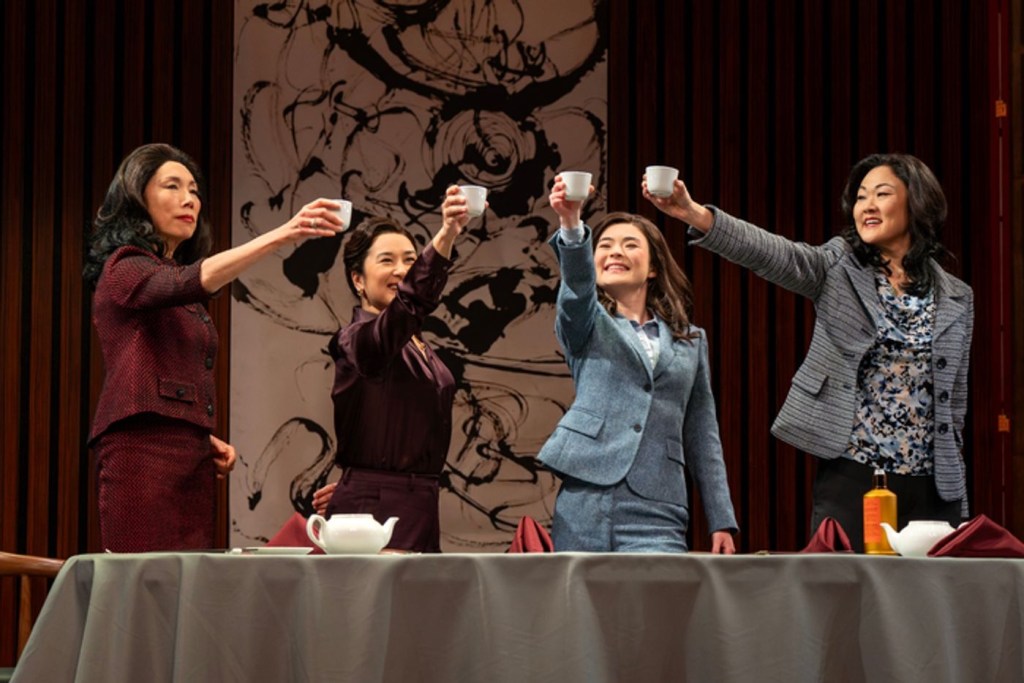
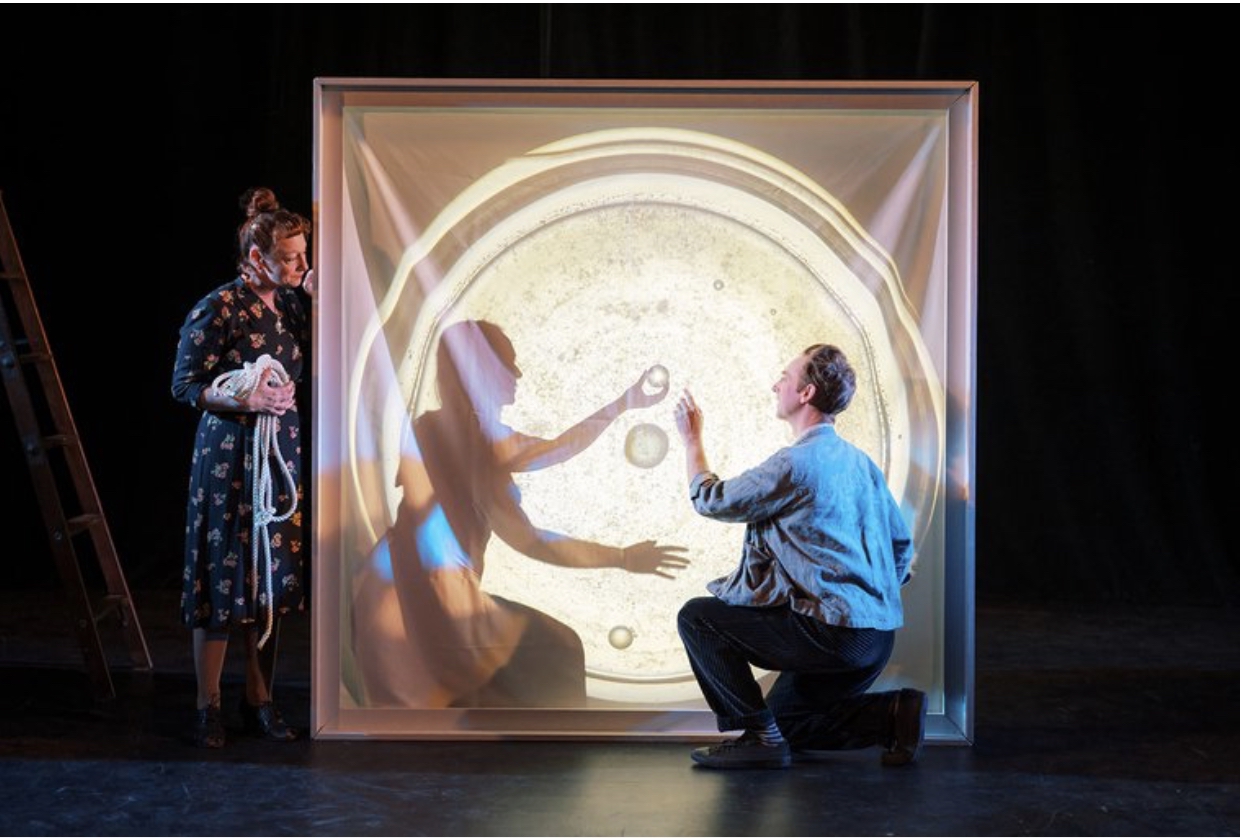
Joyah Dominique, Feyisola Soetan (foreground) and Kevin Richard Best in Sulfur Bottom;
photo by Austin Pogrob


Also in the home is Sir Cavin sister Melissa (Joyah Dominique).  Though she once hoped to move to San Francisco to be a performer, she has resigned herself to keeping a watchful eye on her niece.  As the piece drifts back and forth through time over the course of 40 years— sometimes spanning two decades simultaneously — we meet Fran’s husband Winter (Eric Easter) and daughter Maeve (Feyisola Soetan) as well as Sir Cavin’s friend Copal (Aaron Dorelien) whose ambition perverts the course of their lives.

Performances of Sulfur Bottom are Wednesdays at 7:30 and Saturdays at 1:00 at The Jerry Orbach Theater, 210 West 50th Street, 3rd Floor.  Tickets are available through October 11 at https://www.sulfurbottom.com/.  The shallow venue is ¾ round with well loved seats and over-achieving air conditioning.  A colorful beverage from the bar might add to your feeling of joining the characters in their living room.  

If the ancients had spun a tradition myth about the spirits of environmental justice, it would share DNA with Sulfur Bottom.   It is a cautionary tale, but told with warmth, love, and a touch of humor.  We all want a better life for our children.  But some have a whale of a chance of making it happen.