
“Lost Plays Found Here.” So says The Mint Theater punningly about their mission. Founded in 1992 by Artist Director Jonathan Bank, the company gives new life to neglected plays primarily from the 1930s. Always polished, frequently charming, and often stunningly relevant, the line-up has included The Voysey Inheritance by Harley Granville-Barker, Rachel Crothers’ A Little Journey, and several works by the nearly forgotten Teresa Deevy. They have made their home in several comfortable venues around Manhattan, most recently City Center and Theater Row.
Financially slammed like every other small theater during COVID, The Mint occasionally opens their vault of recorded shows as a passive income stream. Their current offering is the intense drama, Days to Come. Written by Lillian Hellman between two better known plays — The Children’s Hour and Little Foxes — the plot unfolds over the course of a month in 1936 during a strike against a factory in a small Ohio town. Hellman chose to focus on the social impact the strike has on the close community. She conducted interviews with workers and management of the Wooster Brush Company to help her create characters of depth and conviction without the aim of solving their issues. Andrew Rodman, the owner, and Thomas Firth, the most vocal of the workers, are friends. Their long-term relationship makes their conflict more complex, especially when outside forces intervene. As events unfold it becomes clear that simply knowing a person over time doesn’t guarantee you can anticipate their actions.
Director J.R. Sullivan builds the tension between various pairs of characters, each with a distinct style and agenda. Larry Bull is the heart of the show, imbuing Andrew with surprising sensitivity and self-awareness. In contrast, Chris Henry Coffey’s Tom is all gut reaction. Coming between them is Ted Deasy’s Henry Elliot, a lawyer who’s wealth and style mask a grimy interior. In arguably the most difficult role, Mary Bacon successfully balances the symptoms of Andrew’s sister, Cora’s, mental illness with genuine if misguided concern. The rest of the cast includes Janie Brookshire, Dan Daily, Roderick Hill, Betsy Hogg, Geoffrey Allen, Kim Martin-Cotten, Wendy Rich Stetson and Evan Zes.
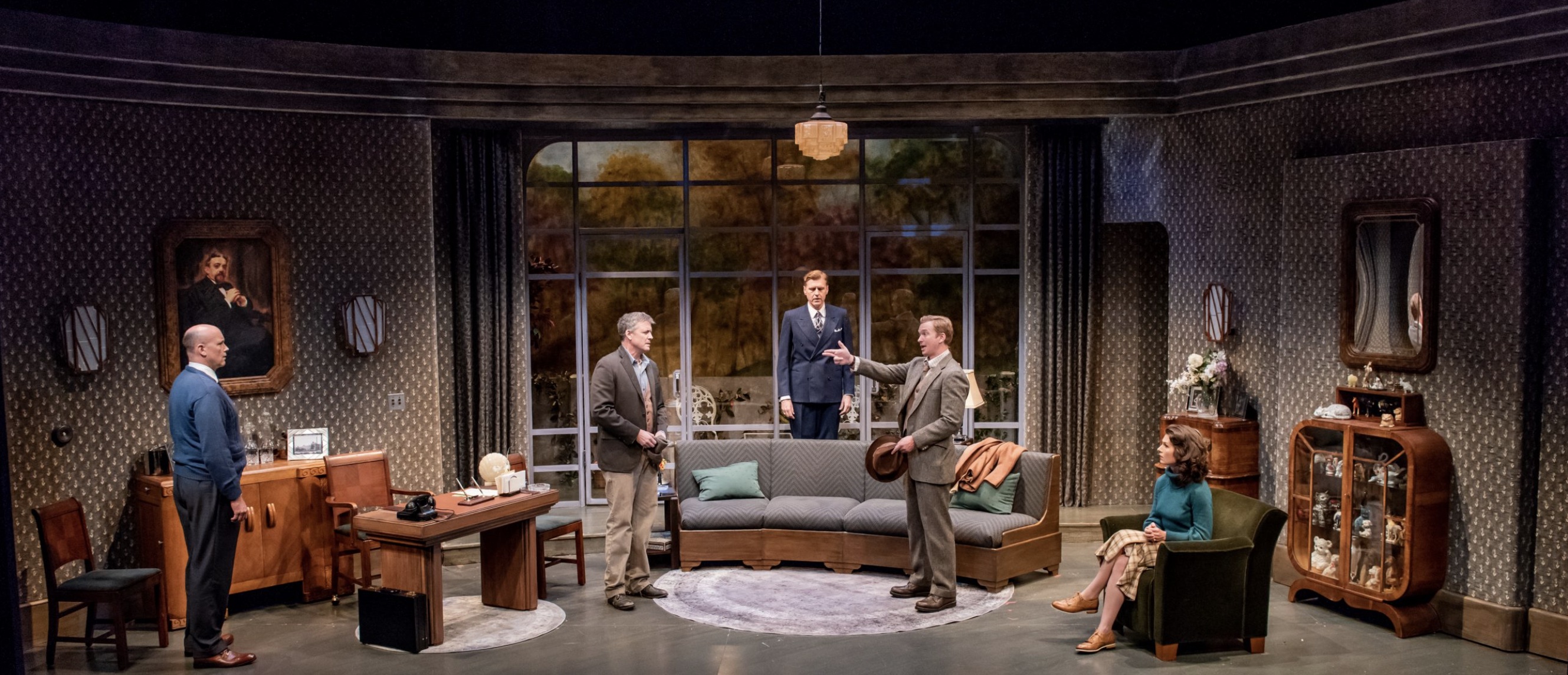
Recorded in August of 2018, the stream is very stable and there’s no log in process, though a valid email address is required. Audio quality is excellent and subtitles easy to read. It is shot from the audience viewpoint with straightforward camera work which never distracts. Costume designer Andrea Varga sets the tone with wonderful fabrics, which can be seen with increased clarity. And even on a small screen, the Rodman’s living room designed by Harry Feiner is lush with decorative detail.
The original Broadway production of Days to Come was a disaster. The influential William Randolph Hearst stormed out and the run lasted a mere seven days. While the work isn’t the most relatable or smooth of The Mint’s productions, it is well worth the two hour investment. It’s available On Demand at https://minttheater.org/ free of charge though April 2. A request for support will appear in the upper right hand corner at the end, by which time I hope you, too, are a fan.


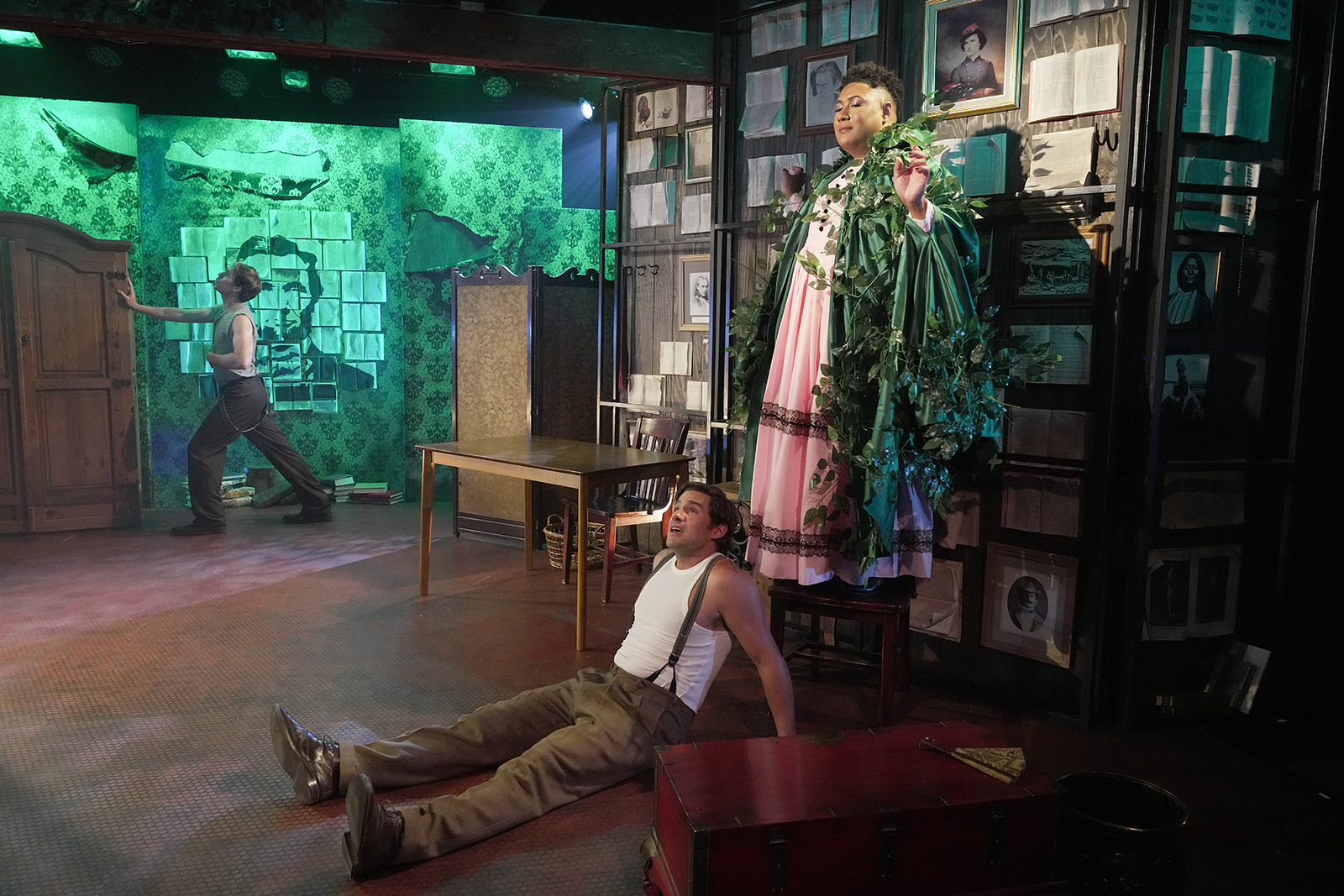


A Nagging Feeling Best Not Ignored – Live Stream
January 6th will never again be just a date, but rather an historic occurrence. Some consider what happened in 2021 to be the most serious attack against democracy. Others saw brave patriots who took action when they felt those same institutions had betrayed them and their leader. A third group finds the entire episode to be just so much more political blah-blah-blah that has nothing to do with them. All of these viewpoints are presented by the unreliable narrator and sole character in Roland Tec’s A Nagging Feeling Best Not Ignored, a live Zoom-based theatrical event.
A ticket to this happening comes with precise instructions. We have volunteered for a citizen panel. Check-in is at 7:45 PM and while the piece will conclude by 9:00PM we are requested to stay for “processing”. In order to participate fully, we will keep our cameras and microphones on and wear headphones to eliminate extraneous noise. (I further recommend using the Full Screen mode and Do Not Disturb to block out any notifications.) After hearing his story, our judgement of “the subject” will be legally binding.
These directions set the expectation for a serious and intense engagement with the solitary character, Benj. Eery music and distant voices that we hear upon entry only heighten the mood. As portrayed by writer Tec, Benj is an attempt to create an Everyman in what is becoming the everyday experience of many. Shot at a slight diagonal, this man clearly needs to clean house in all the meanings of that phrase. His headphones are askew and there’s a ladder and a towel behind him hinting at a mess beyond. COVID has kept him home alone more than at any time in his life. Most of his news is delivered through social media. New connections are only made online, where it is often hard to tell who is genuine and who is a bot. The valley has never been more uncanny than in Benj’s landscape.
As directed by Leigh Strimbeck, Benj speaks in a manner that alternates between rushed and halting. He shares his circumstances just before and shortly after the actions that took place on January 6th, with asides that give insight into his personal life. How deeply you are touched will depend on how well you are managing your own feelings.
The distractions are many. Chat has been left open, which allows for some important intervention but also unnecessary prattle. One of the disadvantages of conversations over Zoom is that the highlighted speaker is the loudest instead of the most important. With over 30 microphones open, those featured including a man with a persistent cough, a woman making clattering noises, and several very personal laughs. Perhaps this is meant as a metaphor for how easily our attention is diverted from discomfort. How deeply can we ever react to something on a screen? But there is no question that the technical set-up made it difficult to remain fully absorbed in what we had been told was a civic duty.
The section that leaves a lasting impression is the post show discussion, which on the night I attended was led by retired psychologist Henry “Hank” Greenspan, a playwright/historian whose work focuses on survivors of genocide. Our audience was less invested in whether Benj should suffer any consequence than in finding productive outlets for their own grief and discouragement. Reactions were only partially to the play and the rest to very real life. One woman pointed out that her feelings are not nagging at all, but in her face screaming 24/7.
That a short work like A Nagging Feeling Best Not Ignored could bring forth that level of emotion at this time of perpetual overwhelm is noteworthy. And while there are problems with Zoom, it does allow for sharing of the work across the country. There is one more scheduled opportunity to be a witness on Wednesday, September 7, at 8PM. Tickets are $22.50 and can be purchases on Eventbrite at https://www.eventbrite.com/e/302460416247.